Podcast: Play in new window | Download
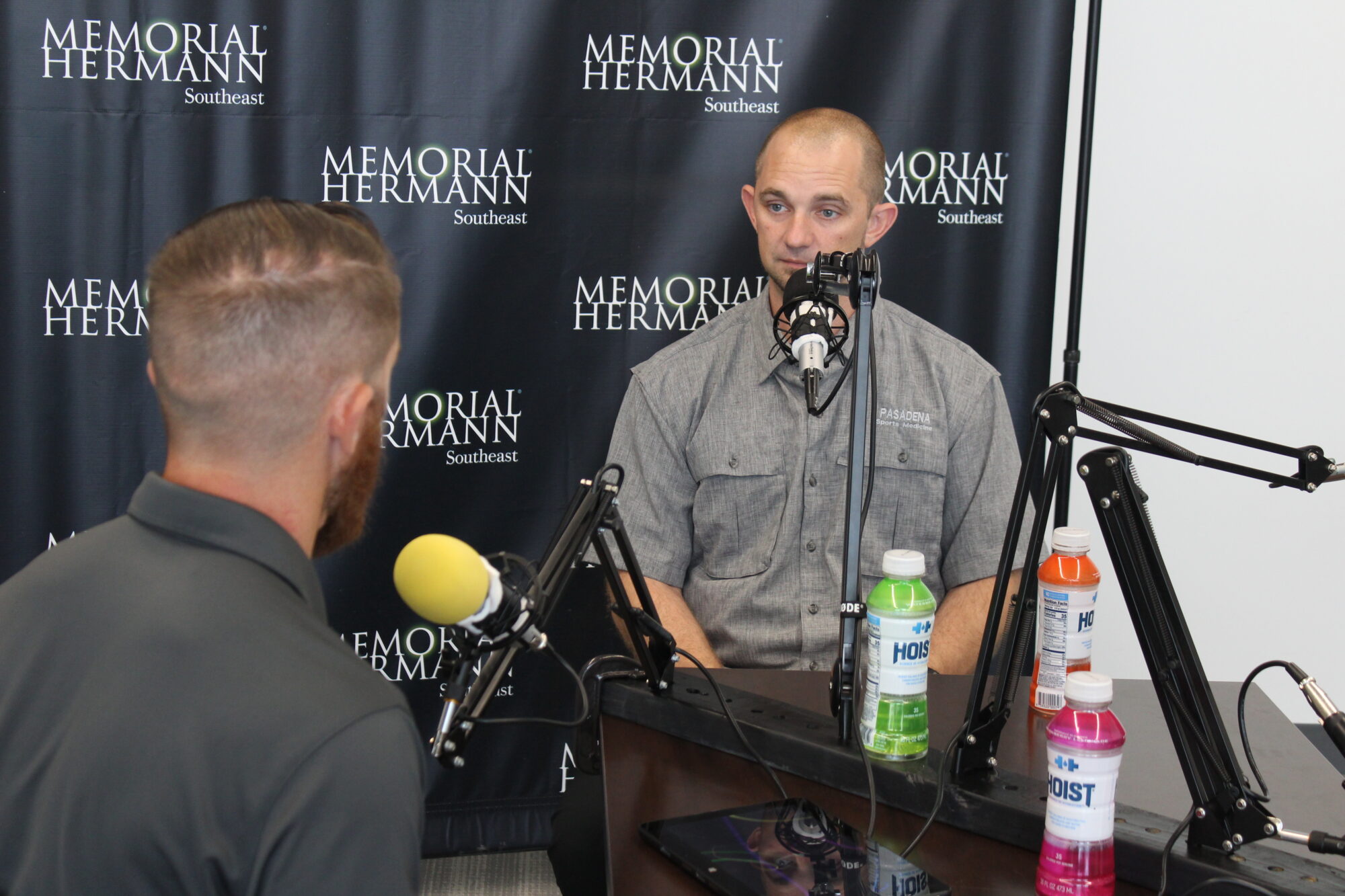
Explore Matthew Hutton's insights on bridging rehab & reconditioning, chronic vs. acute loads, strength, FMS, and preventing reinjury.

Q: What inspired your journey to become an Athletic Trainer (AT) and specifically led you to work with soccer, particularly the Dynamo?
A: My interest began in high school, where I excelled in science and math. After unsatisfying experiences shadowing a dentist and a physical therapist (who didn't involve athletics), tearing my MCL introduced me to my high school AT, who became my inspiration. My path to soccer and the Dynamo was less direct, stemming from an Iowa soccer team connection that led to the Dynamo academy and eventually the main team.
Q: What was the inspiration behind the topic “Bridging the Gap Between Rehab & Reconditioning”?
A: The topic was inspired by a lifelong focus on performance and experience in various competitive athletic gym settings. It emphasizes the crucial collaboration among professionals for optimal return to play, especially evident at the professional soccer level, and highlights a passion for continuous learning in this field.
Q: Can you explain chronic versus acute load ratios in athletic training?
A: Chronic vs. acute load ratios involve monitoring an athlete's training load over the past 3-5 weeks and comparing its average to the current training week. While there's no single “gold standard,” a ratio of 1.4-1.6 is considered ideal, whereas anything above 2.0 suggests an increased risk of injury. Without GPS, metrics like mileage and manual counting of accelerations and decelerations are important. For example, high-speed running is typically above 5.5 m/s, and a sprint is above 7 m/s.
Q: Between strength and power, which is more critical for injury prevention and performance?
A: Research indicates that strength is more crucial for injury prevention, particularly focusing on strength and fascial length. While power is often overlooked, incorporating speed variables is essential. There's a significant gap between heavy Nordic hamstring exercises and sprinting, underscoring the importance of bridging this divide.
Q: Are you Functional Movement Screen (FMS) certified, and how has this influenced your approach?
A: Yes, I am FMS certified, though I rarely use the actual testing. Instead, I heavily utilize the FMS framework and its progression principles. This framework proved highly beneficial, especially when working with large groups of 35-40 athletes at the JUCO level without dedicated strength staff. It allowed me to create reproducible corrective exercise PDFs for efficient widespread application.
Q: How do you address the decrease in confidence experienced by athletes with recurrent injuries?
A: While not an expert in this specific area, my approach involves understanding the athlete as an individual. I engage with them to comprehend their personal experiences and struggles, believing that this empathy is key to providing effective support and boosting their morale during challenging recovery periods.
Q: What is the most significant complication you've observed with hamstring strains?
A: The most significant complication with hamstring strains is the lack of a clear understanding of all the risk variables involved. For instance, an athlete might demonstrate exceptional hamstring strength on a NordBord, yet still experience recurrent injuries. This suggests that factors beyond isolated strength, such as the nervous system and fatigue, play a substantial role, making the absence of definitive risk factor evidence the primary challenge.
Q: What is your foremost tip for preventing reinjury?
A: My biggest tip for preventing reinjury is to employ a “smooth approach,” akin to art shading. This means gradually and consistently progressing exercises without sudden spikes in any variables. The key is to manipulate training variables appropriately and avoid abrupt changes to ensure a smooth and safe rehabilitation journey.
Q: Where did the concept of “working backward” when creating a rehab plan originate for you?
A: The concept of working backward in rehab planning originated from my experience with the Dynamo. Early on, I made the mistake of progressing athletes day by day based on their immediate feeling, which led to an expedited progression and a subsequent contralateral injury setback. This experience highlighted the importance of understanding the overall timeline and setting larger goals in advance to prevent moving too quickly through the rehabilitation process.
Q: What is curvilinear running?
A: Curvilinear running involves having athletes run along a uniform curve, like a half-circle, often marked by the edge of a box. This practice helps identify that the fastest linear sprinters may not necessarily be the fastest curvilinear sprinters, emphasizing the distinct biomechanical demands of curved running.
Sponsor List
Frio Hydration – Superior Hydration products.
Xothrm – Best heating pad available – Use “SMB” or email info@xothrm.com and mention the Sports Medicine Broadcast.
Donate and get some swag (like Patreon but for the school)
HOIST – No matter your reason for dehydration, DRINK HOIST
MedBridge Education – Use “TheSMB” to save some money, be entered in a drawing for a second year free, and support the podcast.
Marc Pro – Use “THESMB” to recover better.
Athletic Dry Needling – Save up to $100 when registering through our link.
