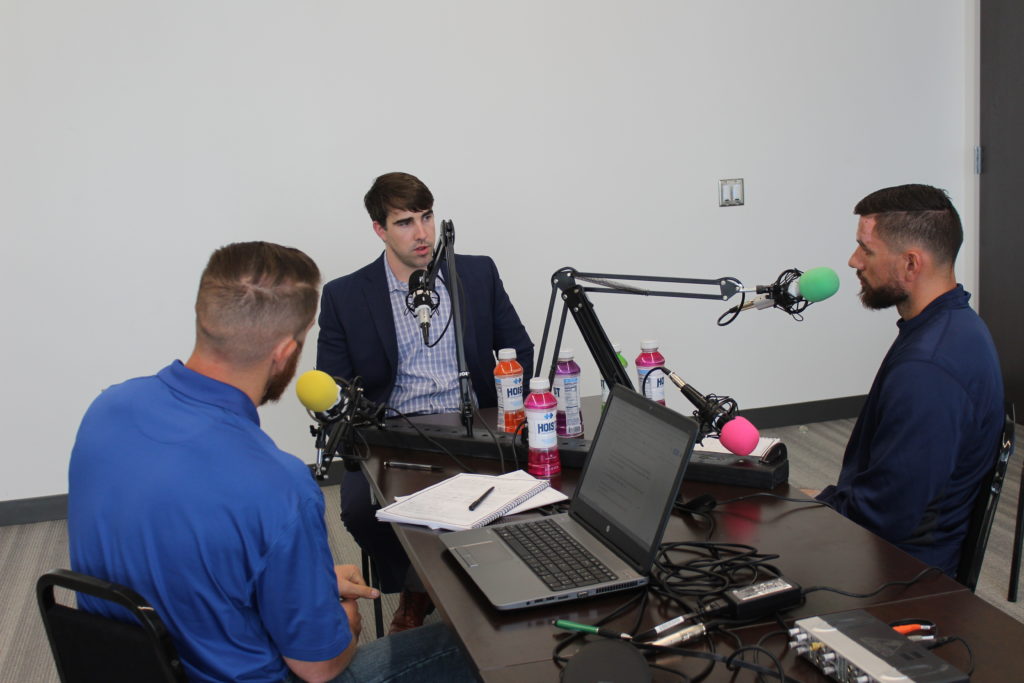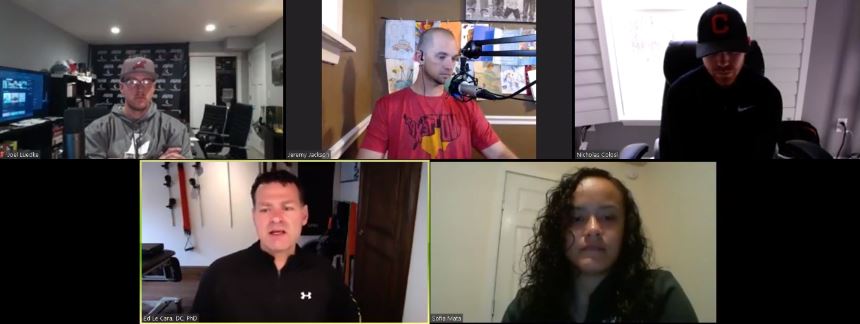
Bart Peterson and Jennifer Rheeling join the SMB to discuss the current recommendations and considerations created by the NATA Secondary Schools Athletic Trainer Committee to help you create your COVID19 RTP.
We need to reconsider EAPs to include social distancing guidelines.
What about lightning…now, where will they go?
Know what phase of COVID19 RTP you are in from the local public health department.
Know the terminology and how its is defined:
Phase 2 is groups of 50. Is that on the field or altogether outside at once?
Covid response team
Who is on yours?
They need to know what the plan of action is if you have a room full of kids and one test positive with temps or signs and symptoms.
ATs are a key component in risk mitigation
Being part of the decision-making process is important.
We also have to know how we are going to take care of the over 55 population…coaches, teachers, and officials.
Communication with the school nurse is crucial and this is a great way to build the bridge.
Cleaning Supplies
Districts may need to buy them out of another fund or fund next years purchases now even though budgets have not opened
Hydration
NO water sources until phase 3
Illness Reporting – start with the state, including local, report up the chain.
Telemedicine –
Congress made this easier during COVID19
Need consent each time you do a telemedicine video
NATA 2020 presidential Election has Candid Candidates
Chad and Kevan host Candid Athletic Training where they take a look at Athletic Training very candidly.
Kathy and Katie are used to answering questions about Athletic Training and fixing what is broken. We wanted to have some very Candid Candidate discussions to help you know your next NATA president.
Why would your undergraduate mascot make the best Athletic Trainer
KF: Beaver: adaptable, ferocious, make a phenomenal home from out of nothing, leaves everything better than it found it.
Being a team player, quietly getting things done under the radar
KD: Longhorn – Magnanimous animal
Quiet, slow-moving; large and graceful
If you get in the ways of the horns you will regret it.
Dr. Jason Magonye and Dr. Shawn Scott put together an Upper Extremity Neuro Eval session at the Trinity University Sports Medicine workshop.
Complete the CEU course FREE from Methodist San Antonio
Be familiar with the nuero anatomy of the upper extremity
Cranial nerves – remember they are contra lateral
Dermatomes – sensory innervation to the upper extremity
If it is intact distal,it is intact proximal. Start distal and work proximal
Brachial Plexus – 11 min
Latisimus dorsi is the ladder climbing muscle
Subscapular – don’t let them pull their hands off their belly
Supraspinatus – starts abduction until the deltoid takes over.
Hornblower test – teres minor
Ulnar nerve (C7/C8-T1)
Median Nerve (C5-C8, T1) tip of fingers, the palm of the hand
Anterior Interosseous Nerve (AIN) 22 min
Radial nerve – extension nerve (C5-T1)
Posterior interosseous nerve – supinator
Most of the extensors
Nerve Entrapment -24 min
When nerves get entrapped they get irritated.
IF YOU CATCH THEM EARLY YOU CAN PREVENT THE NERVE DESTRUCTION PROGRESSION.
If they are having weakness then we need to really push to have that person looked at
Median nerve entrapment
Pronator syndrome is similar to carpal tunnel syndrome.
Carpal tunnel – positive tinels or phalens
Pronator teres syndrome.
Catch the rest in the podcast or on Facebook.
Do not be afraid to ask your athlete to provide copies of imaging and reports.
Case #1
16-year-old football player who presents with bilateral hand pain. Pushed from behind during a game and landed face down with his hands in front of his body.
During further questioning of his hands symptoms he states that both of his middle fingers were tingling.
Due to the fact that the patient is experiencing bilateral symptoms, you must go to the source in which would be the spine (C7 nerve)
Ulnar nerve splits the 4th digit.
If you have someone who presents with tingling and numbness on the inner aspect of the hand you know that is C8.
Radial nerve does not go to the tip of the fingers.
Case #2
Saddle bronc rider came off his horse and landed on his head. He walked out of the arena and did not complain of neck, head, or arm symptoms. After driving from Colorado to Texas he went to the sports medicine room stating that he had started to experience bilateral middle finger tingling sensations.
Worse thing to do when you have bilateral symptoms, trauma, and numbness and tingling would be to compress the neck.
Range of motion, neurological testing, and gentle palpation are appropriate to perform in the exam. Orthopedic testing would not be appropriate for this exam.
Do you personally have a Diagnostic Accuracy cutoff in terms of diagnostic factors to determine if you would use the test?
No, but if there are multiple tests available I look at the most accurate ones. I do not really like it when clinicians do every test available just because.
Are we image happy?
X-ray, MRI, Ultrasound – it is visual, so it gives us something to see
But blood tests do not really give us that. It has to be done against controls.
Having every injury get an MRI would be great, but it is cost-prohibitive for a lot of people
“If we are sending every patient to get an ultrasound image, then why are we there?”
Talk about treating the patient vs treating the image or diagnostic test.
In Athletics, the nice thing is most injuries are life-threatening.
But for internal injuries MRIs are lifesavers.
It is hard to argue with an x-ray showing a fracture
What is the conversation you would have with parents before the season begins about your confidence in your evaluations and role at the school?
If I think we can treat them here we will if I think they need imaging I will refer them to our team doctor and he can order the images.
Mention this though: “a non-sports medicine doctor will likely default to out two weeks” once they do that we are obligated to follow that before beginning rehab and return to play work.
Is there any uncertainty in using diagnostic accuracy values in Athletic Training?
YES! There is untold value – the new ATs have learned this but it is a new development in AT education.
How do we make Diagnostic Accuracy Language more universal?
It is growing as we have more and more ATs learning about it as part of their education.
More talks at conventions with catchy names
When would you not focus on diagnostic accuracy measures?
In short, yes you can go with your gut and try a few other tests when things seem off.
How do you get students to buy-in?
This is how you win arguments.
If someone questions you and your evaluation you Have numbers and research to back it up…this usually will end the argument.
Make them understand it is not just statistics.
Some orthopedic tests have minimum research or no reported value, where does proof of the value come in?
Yes, you can still do the test if there is a value that is not reported.
NATA Presidential candidates Kathy Dieringer and Katie Flanagan join Cari Wood in answering some member-driven questions.
Jill A. asks – Licensing in California – what’s the plan?
Katie Flanagan (KF): We need to pull back, circle the wagons and reconsider it
Kathy Dieringer (KD): It has gotten to the Governor’s desk multiple times…then vetoed but it does not pass due to politics. There is no lack of effort, but there are organizations working against us.
Continue to be persistent
Chris P – How will we work to expand Diversity in our field?
KF: Tripled our membership in 20 years but only increased diversity 3%
Diversity wins
KD: Diversity makes us stronger
NATA membership stat is about 80% caucasian
Other than the board our leadership does not reflect this number
Jeff K – What suggestions do you have for ATs to sustain viable employment due to the lack of sports?
KF: The secondary setting is hugely important and is a portion of what we do.
ALWAYS do a neurovascular assessment. Every single dislocation should experience this before reduction.
With the Shoulder there is a risk of axillary nerve entrapment
Typically if the nerves are intact distally then they are intact all the way up the nerve, therefore do your nerve tests at the distal end of the limb.
A dysvascular limb becomes a medical emergency so do a pulse check on both sides. double and triple check if there is no pulse as some are harder to palpate
Dr. Mundluru also recommends having the functional tests distal to check nerve and muscle function
OK sign
Thumbs up
Cross fingers
Scratch test
Repeat the scratch test at the deltoid and check bilaterally having the patient note any difference in sensation
A good motor assesment for dislocation management is having the patient press backwards at the elbow into the examiners hand. most other ROM tests will be limited or elicit pain.
They also discuss:
Brachial Plexus Crush
Transient symptoms after dislocation
Self-Reduction
Sports Specific RTP
When does it become surgical?
Elbow Dislocations
Hip Dislocations
Patella and Knee
Whenever possible treat young patients non-operatively.
Have stories of Dislocation Management gone well or poorly?
It has been widely recommended that athletes partake in multiple meals throughout the day in order to maintain the energy necessary to participate in athletic events. Most Muslims will automatically adjust their meal frequency to two meals in a 24 hour period, the Suhoor (early breakfast) which takes place at dawn and the Iftar which takes place just after sunset. The challenge is created as student-athletes find it more difficult to eat healthier meals as each Iftar is generally composed of meals that are high in fat, sugar, and salt. It should be noted that meals at both Iftar and Suhoor generally meet the daily caloric needs for student-athletes they may lack proper nutrients that are essential for optimal performance.
Since the daily caloric value is generally met by student-athletes it is important to pay particular attention to the macronutrients (fats, carbohydrates, and protein) consumed. It has been recommended that foods high in both fat and protein are consumed during Iftar and that foods high in carbohydrates and low in glycemic index are consumed during Suhoor in order to provide adequate fuel for the day.
Hydration
Lack of fluid intake throughout the day can create significant risks for those who participate in physical activity during Ramadan as most athletic events take place while Muslim student-athletes are fasting. A common occurrence for student-athletes is to ingest large quantities of fluids during hours of allowed fluid intake. This practice can prove ineffective as it will induce urine loss as well as disrupt sleep. It is recommended to drink water frequently in shorter intervals with solid foods during meals to aid in digestion and water retention. Another recommendation is to drink water with a marginal amount of salt and/or electrolytes prior to dawn to improve water retention and stores. Sugary and caffeinated drinks should also be avoided as they can cause further dehydration.
Sleep
Disruption in sleep will cause daytime fatigue and poor concentration. Coupled with a new fasting cycle, student-athletes may find it difficult to maintain a level of physical performance prior to Ramadan. Student-athletes are recommended to maintain a minimum of 8 to 9 hours of sleep a night. Since meals that break the fasts can often disrupt sleep cycles, student-athletes are encouraged to partake in naps in which they can obtain between 1.5 to 2 hours of sleep in the afternoon when able to in order to negate the effect of nocturnal sleep loss.
Considerations for Coaches and Medical Emergencies
Coaches and staff must always be aware of and sensitive to all student-athletes needs both religious and non-religious. It is important during this time that coaches routinely collect feedback from student-athletes but not to do so in a way that draws attention to a student who is practicing a religious observation. It is also important for the student-athlete to make the coaches aware of their practice, as fasting during Ramadan without knowledge can be misconstrued as a lack of effort or performance without the knowledge of these recommendations.
One consideration to keep in mind is the early days and weeks of a new fasting cycle, is the disruption of a student-athletes ability to self regulate their body temperature during activity without the use of fluids. Student-Athletes will have access to cooling towels during athletic events as well as small cooling tubs in the Athletic Training Room. Student-Athletes are able to rinse their mouths with water in an attempt to stave off thirst but in the event that a medical emergency is believed due to dehydration and/or increase in body temperature, it is allowed to give fluids to the student-athlete and activate the Emergency Action Plan. In any instance, regardless of religious views or practices, all student-athletes should be treated equally as to not draw attention to their needs.
Please inform booster families that student-athletes may attend, but will not be able to participate in pasta or pizza parties that take place during the season. In addition please inform banquet planning families to consider providing a take-home option during the postseason banquets. Even though there will be plenty of food for them at home, the notice and consideration will not go unnoticed by the student-athlete and their families.
Internet dropped so we have part one and part two on FB
Rehabilitation for Anterior Cruciate Ligament Reconstruction (ACLR) has for years followed the time-based approach progressing athletes to the next step based solely on how far they are out from surgery. Research has shown that criteria based protocols, where each athlete only progresses once they reach a specific goal improves outcomes in patients, specifically athletic populations. (cited research) In this course, participants will learn and discuss different methodologies for athletic trainers to use determining rehabilitation advancement for patients returning from ACLR.
Outline
Why do we say that at 6 weeks every ACL should be able to do a partial squat and be at 90 degrees flexion?
Adrian Peterson only needed 6 months…he rehabbed 25 hours per week
Navarro Bowman had Failure To Thrive and was 12 months +
Normal rehabilitation is about 9 months but often they athlete still lacks full function at this point and they are not totally comfortable with their knee
Let’s look at it similar to school…you pass the test you move on…you fail the test you get held back.
150,000-200,000 ACL surgeries per year.
How are we doing a disservice to our patients using a time-based rehab program?
NFL bases their timeline on RTP for week ONE readiness
What are the parameters for RTP?
Each phase should have criteria before advancing:
Physician approval
Published research
Biological healing
Tissue healing – know the biological clock and tissue remodeling for each surgery
Long-term adult smokers may have secondary psychosis due to use, and long-term smokers may accrue damage to lungs
With patients that we are working with, the use of THC/CBD would be more for the short-term benefits
More information about the use of Cannabis?
11-12:15 min
The advocation of these products to minors should not be done because of the lack of research, although there are specific laws for minors and medicinal use
Literature suggests these products should be used for people 25 yrs or older so that the brain is fully developed
Laws are being driven by consumers who are electing pro-cannabis officials
Laws are changing rapidly in favor of cannabis use (decriminalization)
How do we know which CBD products are legitimate?
12:15-14 min
CBD products are similar to supplements as they are not federally regulated
There have been studies that prove some products on the market are 100% illegitimate
It’s legal for companies to say products are “90% proprietary” meaning we only know 10% of what’s actually in the products
Everything on the market could be a hybrid, so there’s no guarantee that a CBD product does not contain THC
Hybrids in the sport world may be problematic, and as a medical professional our recommendations should be conservative
What are some of the uses of Cannabis?
14-15:10 min
There are legal drugs on the market approved by the federal government
There are medications for epileptic seizures and for cancer patients to help reduce nausea and vomiting due to chemotherapy
There’s ongoing research on use for post-concussive patients, patients with diabetes, MS, ALS, etc.
Informally (subjective feedback) Cannabis reduces inflammation, localized pain, and anxiety
The challenge for athletes and where to go for information on Cannabis
15:10-19 min
Athletes and medical staff need to be aware of laws nationally and internationally
33 states in the US have approved cannabis use, but all the laws vary (possession in person, travel, etc.)
There’s a need for a resource athletes and all sport related personnel can go to for information on cannabis
When you Google search “Cannabis” you need to be able to decipher whether or not the site you are on has a 3rd party objective or a hidden agenda
Government sites may have limited information because it’s still an illegal drug
Laws and regulations are changing daily so you should find a resource with active information
Secondary school message to students? 19:10-21min
Cannabis is a plant but is a serious substance especially in a developing brain
Use of cannabis can cause a loss in the ability to calculate, learn and understand new languages in developing brains, it can also affect emotions
From the CBD aspect, it’s “GNC Round 2” you just don’t know what’s actually in the product
Speak with a physician prior to use (preferably an open-minded physician), and/or have the product compounded (information from a pharmacy)
Summary
As an Athletic Trainer, we need to be able to educate our athletes, parents, and coaches by researching cannabis to the best of our ability