Podcast: Play in new window | Download
A Podcast to Promote and Improve Your Practice as an Athletic Trainer
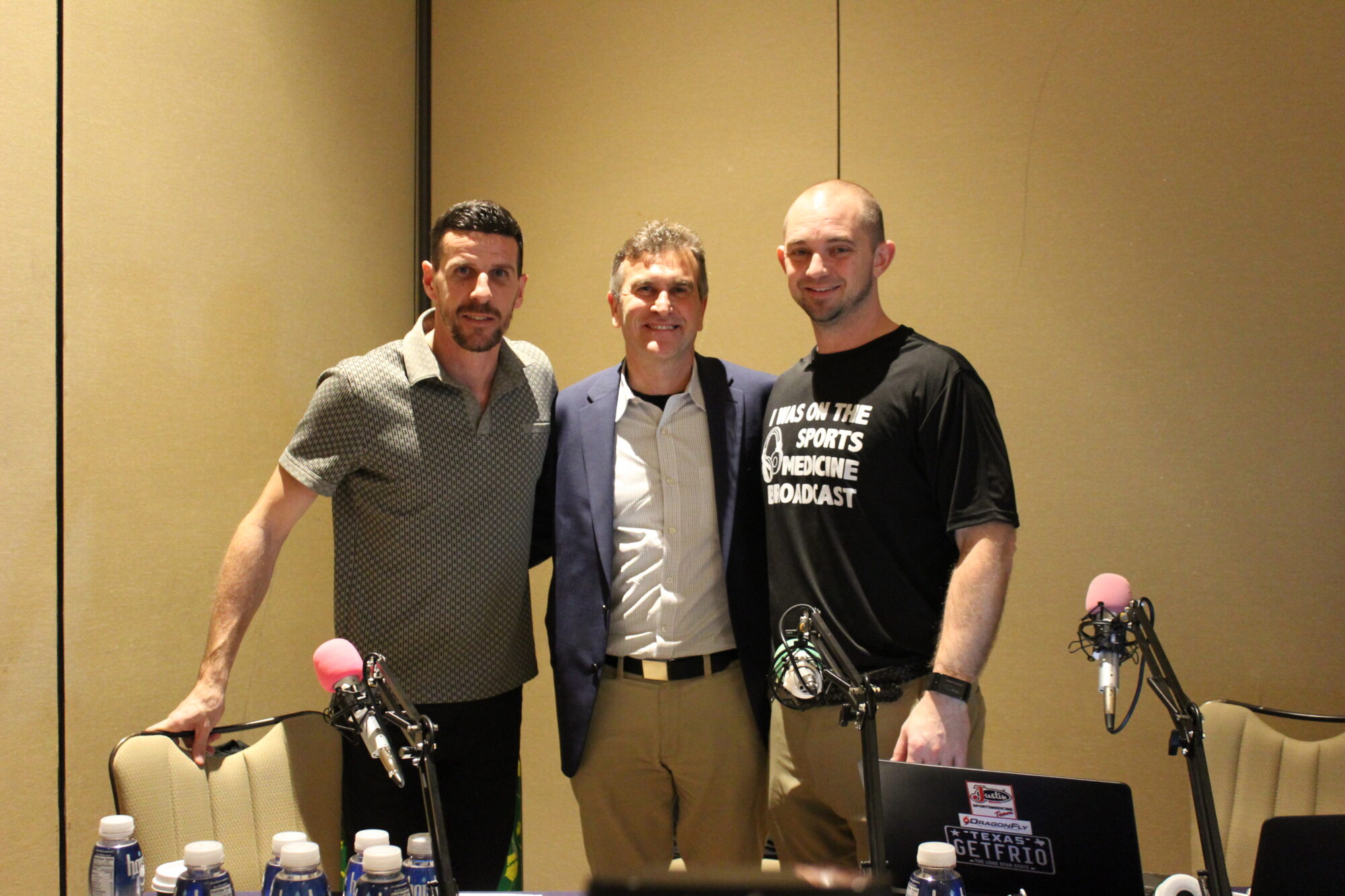
In this episode of the Sports Medicine Broadcast, host Chase Morales sits down with Travis Turner to dissect current consensus guidelines, emerging clinical technologies, and practical preventive strategies for athletic trainers. From interpreting consensus research to managing complex return-to-sport scenarios, this discussion provides actionable insights designed to elevate clinical practice.
Key Takeaways from the Amsterdam Consensus
The discussion opens with an overview of the international consensus process. Turner breaks down the preventative section of the extensive research consensus statement originating from the October 2022 international conference in Amsterdam.
- Consensus Thresholds: The statement reached a 78.6% consensus among panel experts, just shy of the official 80% consensus threshold. Despite missing the formal threshold, it offers vital, research-backed guidance.
- Implementation: The publication serves as an essential framework to ensure clinicians approach daily practice from an informed, evidence-based baseline.
Innovative Approaches to Return-to-Sport
Addressing unique athlete presentations during return-to-play requires creative adaptations. Morales raised a case study involving a diver experiencing dizziness and lightheadedness when looking down at the water during practice.
- Dynamic VOR Integration: For athletes struggling with complex visual environments during rehabilitation, Turner suggests introducing Vestibular-Ocular Reflex (VOR) exercises inside moving apparatuses—such as glass elevators or while walking up and down stairs. This creates environmental visual motion while maintaining a controlled ground surface.
- Core & Cervical Stability: Maintaining strict core stability and neck strength throughout the competitive season is essential for non-contact aquatic athletes.
- Simulated Visual Environments: Utilizing stationary cardio equipment combined with dynamic visual stimulation (e.g., watching TV during exercise) can bridge the gap before full sport-specific re-entry.
The Evolution of Wearable Technology
Wearable technology continues to expand beyond traditional impact tracking in contact sports.
- Expanded Applications: Data collection sensors are moving from helmets to wrists, trunks, and limbs. Sports such as gymnastics and equestrian barrel racing now utilize body-worn sensors to evaluate biomechanics, rotational forces, and body angles during motion.
- Accessibility: As sensors become smaller and more cost-effective, their integration into everyday athletic training protocols will significantly increase.
Culture & Education: Driving Athlete Compliance
Education remains one of the most effective tools for reducing injury risk and facilitating proper care.
- Two-Fold Educational Approach: Effective programs must address both proper movement biomechanics to prevent injury and symptom recognition to improve early identification.
- Reporting Trends: Increased education has directly contributed to higher self-reporting and peer-reporting rates, overcoming previous cultural barriers where athletes hid symptoms.
Practical Prevention: Cervical Conditioning & Protective Gear
When implementing targeted neck-strengthening programs in high-impact sports, athletic trainers often face compliance challenges.
- The “Shotgun” Integration Approach: Rather than relying on dedicated weight room sessions, embed neck-strengthening drills across multiple touchpoints—such as field warm-ups, weight room activations, and cool-downs.
- Manual Resistance (“Buddy System”): Simple partner-resisted manual neck exercises at the end of training sessions foster early habits in younger athletes, preparing them for advanced equipment in college or professional settings.
- Emerging Devices: Devices like the FDA-cleared Q-Collar aim to apply mild pressure to internal jugular veins to reduce internal brain movement during impacts. While gaining visibility in high school and professional settings, continuous evaluation of surrounding research remains critical.
Guest Contact Information
- Guest: Travis Turner
- Email: travis.turner@uth.tmc.edu (University of Texas Health Science Center at Houston / Texas Medical Center)
Episode Credits
- Host: Chase Morales
- Audio Engineer: Shelby Gaytan
- Equipment provided by: Russell Sadberry
- Recording made possible by: Bob Marley and the Memorial Hermann Rockets Sports Medicine Institute team