Modern Strategies in Concussion Prevention

A Podcast to Promote and Improve Your Practice as an Athletic Trainer

In this episode of the Sports Medicine Broadcast, host Chase Morales sits down with Travis Turner to dissect current consensus guidelines, emerging clinical technologies, and practical preventive strategies for athletic trainers. From interpreting consensus research to managing complex return-to-sport scenarios, this discussion provides actionable insights designed to elevate clinical practice.

Key Takeaways from the Amsterdam Consensus

The discussion opens with an overview of the international consensus process. Turner breaks down the preventative section of the extensive research consensus statement originating from the October 2022 international conference in Amsterdam.

  • Consensus Thresholds: The statement reached a 78.6% consensus among panel experts, just shy of the official 80% consensus threshold. Despite missing the formal threshold, it offers vital, research-backed guidance.
  • Implementation: The publication serves as an essential framework to ensure clinicians approach daily practice from an informed, evidence-based baseline.

Innovative Approaches to Return-to-Sport

Addressing unique athlete presentations during return-to-play requires creative adaptations. Morales raised a case study involving a diver experiencing dizziness and lightheadedness when looking down at the water during practice.

  • Dynamic VOR Integration: For athletes struggling with complex visual environments during rehabilitation, Turner suggests introducing Vestibular-Ocular Reflex (VOR) exercises inside moving apparatuses—such as glass elevators or while walking up and down stairs. This creates environmental visual motion while maintaining a controlled ground surface.
  • Core & Cervical Stability: Maintaining strict core stability and neck strength throughout the competitive season is essential for non-contact aquatic athletes.
  • Simulated Visual Environments: Utilizing stationary cardio equipment combined with dynamic visual stimulation (e.g., watching TV during exercise) can bridge the gap before full sport-specific re-entry.

The Evolution of Wearable Technology

Wearable technology continues to expand beyond traditional impact tracking in contact sports.

  • Expanded Applications: Data collection sensors are moving from helmets to wrists, trunks, and limbs. Sports such as gymnastics and equestrian barrel racing now utilize body-worn sensors to evaluate biomechanics, rotational forces, and body angles during motion.
  • Accessibility: As sensors become smaller and more cost-effective, their integration into everyday athletic training protocols will significantly increase.

Culture & Education: Driving Athlete Compliance

Education remains one of the most effective tools for reducing injury risk and facilitating proper care.

  • Two-Fold Educational Approach: Effective programs must address both proper movement biomechanics to prevent injury and symptom recognition to improve early identification.
  • Reporting Trends: Increased education has directly contributed to higher self-reporting and peer-reporting rates, overcoming previous cultural barriers where athletes hid symptoms.

Practical Prevention: Cervical Conditioning & Protective Gear

When implementing targeted neck-strengthening programs in high-impact sports, athletic trainers often face compliance challenges.

  • The “Shotgun” Integration Approach: Rather than relying on dedicated weight room sessions, embed neck-strengthening drills across multiple touchpoints—such as field warm-ups, weight room activations, and cool-downs.
  • Manual Resistance (“Buddy System”): Simple partner-resisted manual neck exercises at the end of training sessions foster early habits in younger athletes, preparing them for advanced equipment in college or professional settings.
  • Emerging Devices: Devices like the FDA-cleared Q-Collar aim to apply mild pressure to internal jugular veins to reduce internal brain movement during impacts. While gaining visibility in high school and professional settings, continuous evaluation of surrounding research remains critical.

Guest Contact Information

  • Guest: Travis Turner
  • Email: travis.turner@uth.tmc.edu (University of Texas Health Science Center at Houston / Texas Medical Center)

Episode Credits

  • Host: Chase Morales
  • Audio Engineer: Shelby Gaytan
  • Equipment provided by: Russell Sadberry
  • Recording made possible by: Bob Marley and the Memorial Hermann Rockets Sports Medicine Institute team
AT in Georgia with Rob Dicks

Being an AT in Georgia is a lot like being an AT in Texas. Rob Dicks knew he wanted to become an AT by the time he started high school. He is now leading the Georgia Athletic Trainers Association.

Podcast Summary

This episode features Jeremy Jackson and Rob Dix, the current President of the Georgia Athletic Trainers Association (GATA). Rob shares his journey from a 14-year-old aspiring ‘sports doctor’ to a seasoned Athletic Trainer, driven by an early interaction with an AT after an MCL sprain. He recounts his experience balancing a high-achieving student life and a career that included internships with the Buccaneers and the Falcons. Rob eventually prioritized family, leading him to a 22-year career at Lagrange College, where he transitioned through several administrative and leadership roles, culminating as an Associate AD before returning to high school athletics at Callaway High School.

Rob discusses his leadership philosophy, ‘We are better together,’ and his role as a servant leader for GATA members. He highlights his commitment to mentorship, including co-founding a large support group/think tank for brown and black athletic trainers. On the legislative front, Rob addresses current challenges facing AT in Georgia, such as opposition to updating the Practice Act and the exclusion of athletic trainers from a dry needling bill that could make the practice illegal for ATs in the state. Despite the challenges, Rob notes Georgia’s leadership in the profession: the state is now number one nationally for heat illness policies and is a top contender for secondary school AT hiring and salary data. The ultimate goal is to place an AT in every school system with athletics.

Show Notes: The State of AT in Georgia with Rob Dix

Episode Highlights

Rob Dix discusses his passion for athletic training, his pivot from an NFL career path to collegiate and high school settings, and his dedication to leadership and mentorship within the profession.

Key Takeaways for AT in Georgia:

  • The Journey to AT: Rob’s interest began at 14, influenced by his high school coach and solidified by his first AT, Jenny, after an MCL sprain in 10th grade.
  • A Career Pivot: After working with the Falcons, Rob chose a career path at Lagrange College (22 years) to better prioritize his family life.
  • Leadership Philosophy: Rob leads with the motto, ‘We are better together,’ viewing his role as serving the needs of GATA members.
  • Mentorship & Community: Rob is a dedicated preceptor and helped start a support group/think tank for brown and black ATs, which has grown to over 1,600 members.
  • Practice Act Challenges: A major focus for GATA is navigating legislative challenges, including opposition to the Practice Act update and the exclusion of AT in Georgia from a dry needling bill.
  • Georgia as a Leader: Georgia is ranked number one in the nation for heat illness policies and is a leader in secondary school AT hiring and compensation, making it an attractive state for practicing AT in Georgia.

Connect with Rob Dicks:

  • Email: rob.dicks.sr@gmail
  • Instagram: Rob_dsr
  • Facebook: Rob Dicks

Group: The Brown and Black AT Think Tank (contact Rob for involvement)

These people LOVE Athletic Trainers and help support the podcast:

Frio Hydration – Superior Hydration products.

Xothrm – Best heating pad available – Use “SMB” or email info@xothrm.com and mention the Sports Medicine Broadcast

Donate and get some swag (like Patreon but for the school)

HOIST – No matter your reason for dehydration DRINK HOIST

MedBridge Education – Use “TheSMB” to save some money, be entered in a drawing for a second year free, and support the podcast.

Marc Pro – Use “THESMB” to recover better.

Athletic Dry Needling – Save up to $100 when registering through our link.

LEADS academy; frio hydration

What Comes Next

A fun song from the musical Hamilton, “What Comes Next” is the line we are focused on for the start of the 2021 leadership in AT podcast series.

Thanks Patrick Ohaver for putting it all together.

King George; What Comes Next

What comes next?? 

You have wanted to move up to a leadership position in the company, the school, or even a professional organization.

Just as a young America made the leap into independence, now you are given the opportunity to lead.

That is the question on this episode..

Do you know how hard it is to lead?

Patrick– As Former supervisor for a hospital Outreach based program I was given the task of leading approximately 25 athletic trainers. Some of these athletic trainers were my peers and that in itself is a difficult part to lead your own peers.I really resonated with this song in Hamilton as I knew it would be difficult to lead however I did not realize the full extent until I was in that situation. It is difficult to lead and not just your peers but to lead a cohesive group of athletic trainers.

 I was fortunate enough to have mentors that were in leadership positions and I observe them through my career taking mental notes on what I would do in certain situations how I would overreact how I would respond however I learned so much during my tenure as the supervisor of Athletic Training Services and dealt with a lot of specific leadership challenges. 

Patrick — Another point in King George’s song what comes next really struck me was when your people say they hate you don’t come crawling back to me. Now as a recovering people pleaser, I strive to make everyone feel Equitable and try to look for the win-win. However, during my time I discovered win-win just doesn’t work out sometimes. When you have to lead a large group you are not going to please everyone now. I would not say that my employees “hated me “ however some decisions that were made did not meet with high favor.

I can recall a time when we sent out an employee satisfaction survey. It was a sort of 360-degree look at our leadership team.

 Through the eyes of the employees and I was expecting an overall positive response however, the amount of negative response was shocking and really caused a point of reflection and revaluation of my leadership style and our leadership team’s style.

 I was fortunate enough to work with two other athletic trainers in the leadership team. We assisted each other and each had our own strengths and weaknesses in the leadership team. However, that employee survey was a watershed moment for me and my leadership style.

Have you had an employee survey or an evaluation done on you that was not what you expected and did it change your outlook?

George Washington states – “Winning was easy, leading is harder”-

This point in the musical also echoes a similar thought that getting to the top may be easy however leading is harder.

Leading your peers is very difficult. We can look back at a recent Facebook post in the Secondary School group where an employee was ranting to her “friend” who was in an administrative position about the organization. I am not sure what was said or how it was said however the other party deemed it necessary to inform her superiors and her subordinate was reprimanded.

There’s a good book called “From buds to boss” by Guy Harris and Kevin Eikenberry.  It’s a good book and help me get some perspective in my early supervisory times.

Being the boss isn’t all Fame and Glory. Some people want that prestige and that title however, if you’re not prepared, then it may be more of a detriment than an aid.

Call to action:

Were you ever on your own?  I recently heard from a long-time listener Caleb who was out in China as an AT and he was on his own for a while.  Share your story with us.

Contact Us

Patrick – Twitter

John – Twitter

Jeremy – Twitter

These people LOVE Athletic Trainers and help support the podcast:

Frio Hydration – Superior Hydration products.

Xothrm – Best heating pad available – Use “SMB” or email info@xothrm.com and mention the Sports Medicine Broadcast

Donate and get some swag (like Patreon but for the school)

HOIST – No matter your reason for dehydration DRINK HOIST

MedBridge Education – Use “TheSMB” to save some money, be entered in a drawing for a second year free, and support the podcast.

Marc Pro – Use “THESMB” to recover better.

Athletic Dry Needling – Save up to $100 when registering through our link.

Athletic Trainer to Athletic Director – 477

How can I become an Athletic Director?

Many ATs have moved on to Administration.  Ross Cooper is an Athletic Director and Athletic Trainer for Detroit County Day Schools.

John Ciecko gets to the point to figure out how he got there and how you can follow Ross’s path.

Ross Cooper; Athletic director; AD

Here are a few key points from Ross Cooper

  • Experienced ATs already perform many of the duties of an Athletic Director
  • You have to be willing to get out of your comfort zone
  • Exposure to multiple leaders and leadership styles is beneficial
  • Self-Reflection is crucial
  • Relationships with each person are important – never know who is watching
  • Be a good listener

Ross also mentioned he took the schedules and policies and made them all digital.  Using a system like Dragonfly MAX can help an Athletic Trainer reduce paper work, streamline the PPE process and improve communication with coaches, parents, and athletes

Want to reach out to Ross?

Connect with him on Linkedin

Email him

Have some praises?

Send them to John on twitter

Got complaints?

I’ll take those


State Association Advisory Committee – 475

What is the State Association Advisory Committee?

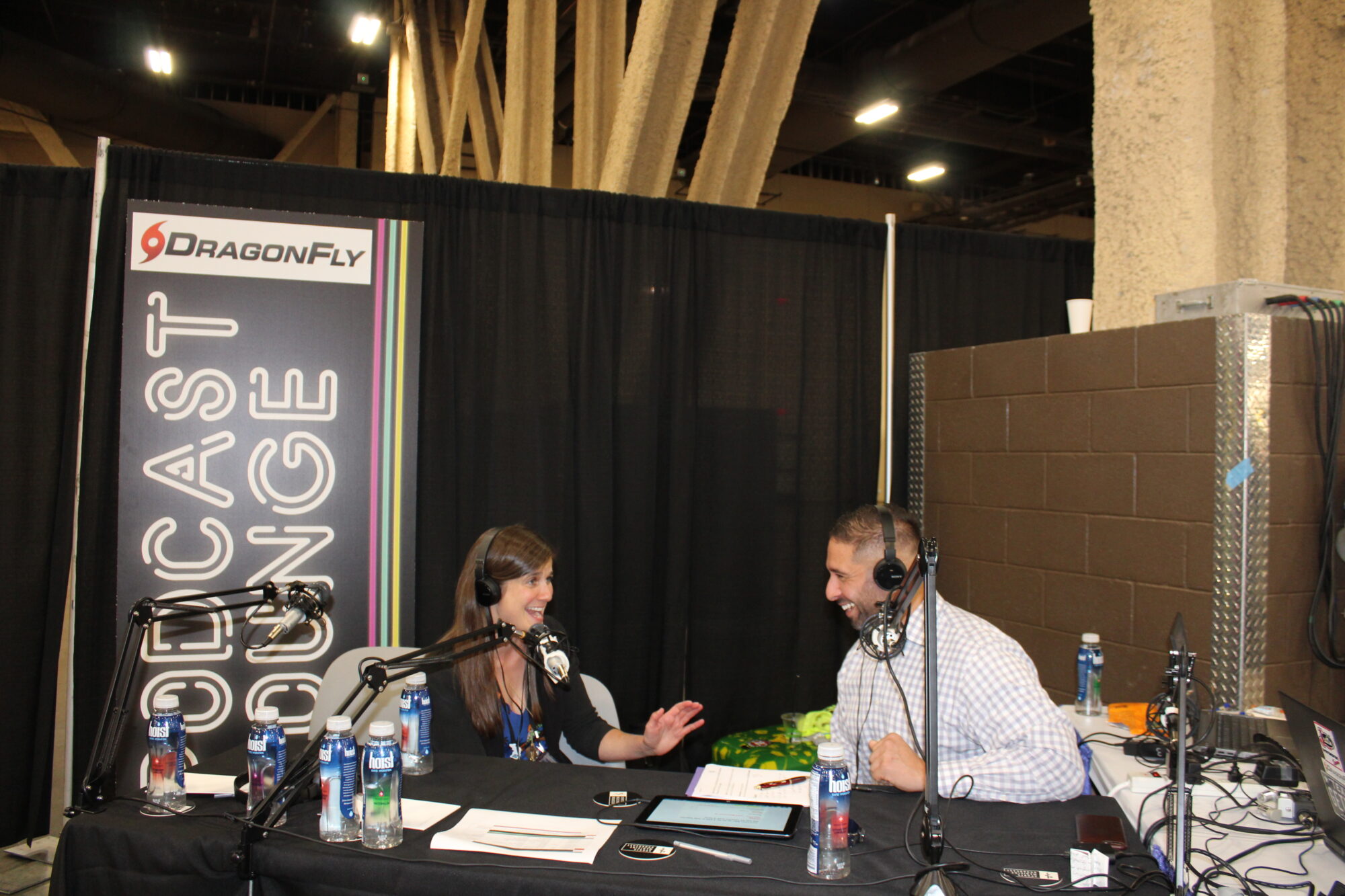
Mike Van Bruggen joins the podcast lounge live in New Orleans to discuss the NATA’s State Association Advisory Committee or SAAC.
The SAAC exists to walk along side the state association and help unify AT across all states.
Mike share how the NATA is trying to build unity and support the efforts of each state as our profession moves forward.

Were are we?

We are broadcasting live from the 2018 NATA expo in New Orleans.
We used Facebook live, YouTube Live, Instagram Live and even periscope to stream as many of the NATA 2018 Expo Interviews as possible.

I would not be at NATA without these folks:

DragonFly MAX  – simplified sports medicine
Frio Hydration – superior hydration products.
Check out Hoist to help maximize performance

I want your feedback

Hit me up on Twitter @MrJeremyJackson

Director of Sports Medicine Kurt Andrews – 469

Who is Kurt Andrews?

Director of Sports Medicine for Sporting KC Kurt Andrews is a husband, Athletic Trainer and pursuer of knowledge.

Kurt Provides leadership to the Sports Medicine team that protects and prepares the Sporting Kansas City soccer players.

As director you also have to plan and prepare them team, practice procedures and EAPs and coordinate Doctors, PTs, EMTs, Massage Therapist and all other medical team members.

Kurt also is a leader in PSATS or Professional Soccer Athletic Trainers.

Leadership Series

John Ciecko assembled an outstanding lineup to cover the various aspects of Leadership in AT.

Check out our whole #LeadershipSeries as we apply these principles to Athletic Training and various settings.

Books we recommend

Leadership Series; Extreme Ownership, John Maxwell

Extreme Ownership

Dichotomy of Leadership

21 Irrefutable Laws of leadership

Podcast Sponsors

Dragonfly Max

Hoist logo; rapid hydration

Frio Hydration

School Health

Contact Us

Kurt Andrews

John Ciecko 3

Jeremy Jackson


Female AT Struggles – 131

Sonia Gysland has broken the ranks of professional football; Dawn Stuckey is a head Athletic Trainer at Rice University; Christina Cope is an Athletic Trainer at Klein High School.  All three have teamed up to discuss some of the struggles for female Athletic Trainers.

Thanks for the special contributions from @FemaleATProbs

Top 10 reasons it is so tough being a female athletic trainer:

10. Apparently Spice Girls music is not appropriate pre game music
9. Wearing make up means we’re trying to impress someone
8. Not wearing make up means we’re either sick or very tired (even when we’re neither.)
7. Football/wrestling coaches think we know nothing about football/wrestling
6. Being asked to homecoming, prom, or any other school function is not what we had in mind when we go on dates…

Find the full list in the Show Notes 131

U of H MAT

Video episode of 131

Relationships Between a Coach and Athletic Trainer – 122

Robbie McFarlan has been an AT for five years, but has had a very rare path to understanding the mind of a coach.  His advice “Stop and try to understand where they are coming from before you take it personal” Check out our conversation about how each of has failed and learned a lesson the hard way about interacting with coaches.

Frio Hydration

Thanks to  JJ Worthen for allowing us to use his music.

Show notes for Episode 122

Masters of Athletic Training at U of H

@UofHMAT