Emerging Setting with Max Mahaffey

An emerging setting is the non traditional roles, athletics, an Athletic Trainer is employed in.

The Physician Practice Setting only makes up around 2% of Athletic Trainers currently.

About Max:

  • He played football and graduated from Louisiana College
  • Worked in Alexandria, Louisianna for 2 years with an independent minor league team and as a physician extender
  • Went back to Lousianna college to work as an AT
  • Went back to school and got his masters at the University of Houston
  • Worked as the Baseball AT after graduating
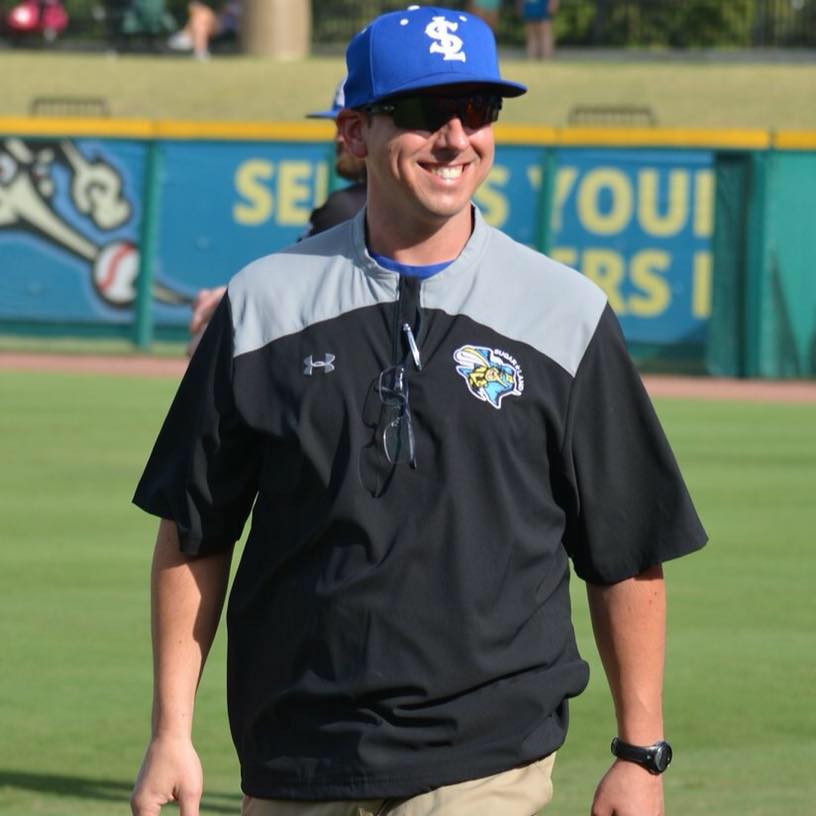
  • Got hired by Memorial Hermann to work with the Sugarland Skeeters

What do you need to work in the PPS? 

DME – Durable Medical Equipment – need to be able to communicate how and why to use these devices

Casting and splinting – both removal and application.

Communicating the goals and expected outcomes.

Physician Practice Value Model

  • Manual for what ATs do in this role

What does max do in this emerging practice setting?

  • HPI
  • Exam
  • Initial assessment / DDx
    • Answer questions
  • Confer with Doctor
  • Plan
    • Imaging
    • HEP vs PT
    • RTP protocol
    • Orthos referrals
    • In-office procedures

Pros and Cons of Physicians Practice Setting

Pros

  • Work closely with doctors
  • Set schedule vs athletics
  • Had freedom to pick “regular AT” per diem
  • Wide variety of patients
    • Pediatric
    • Youth
    • Geriatric
  • A lot of concussions 

Cons

  • Public’s lack of knowledge of an AT
  • Difficult/ rude patients
  • They are not there to see Max
  • A lot of concussions
  • A lot of the same stuff
    • neck/back

CPT Codes

  • ICD vs CPT
  • 97110 Therapeutic Exercise for 15 minutes
    • Codes are not profession-specific

Financial Impact

  • Worth and Value
    • Worth – the monetary cost of the service
    • Value – is the perceived worth
  • ATs can increase efficiency by performing the non-billable tasks and freeing up the Doc for the billable tasks.
  • Pecha et al study
    • Increase of $200-$1200 per day increase
  • In Max’s clinic study over 6 months, this value would have been about $16,000
    • Patient satisfaction survey

    Sugarland Skeeters experience:

    • He has been there since the inaugural season
    • Mostly veteran players trying to get back to affiliated ball

    Facebook video

    Contact Us

    Max

    Jeremy

    Financial Supporters

    Frio Hydration – Superior Hydration products.

    Xothrm – Best heating pad available – Use “SMB” or email info@xothrm.com and mention the Sports Medicine Broadcast

    Donate and get some swag (like Patreon but for the school)

    HOIST – No matter your reason for dehydration DRINK HOIST

    MedBridge Education – Use “TheSMB” to save some money, be entered in a drawing for a second year free, and support the podcast.

    Marc Pro – Use “THESMB” to recover better.

    Athletic Dry Needling – Save up to $100 when registering through our link.
    JOhn Harmon; Candice Teunis; Wrist and Thumb; Frio Hydration; NATA

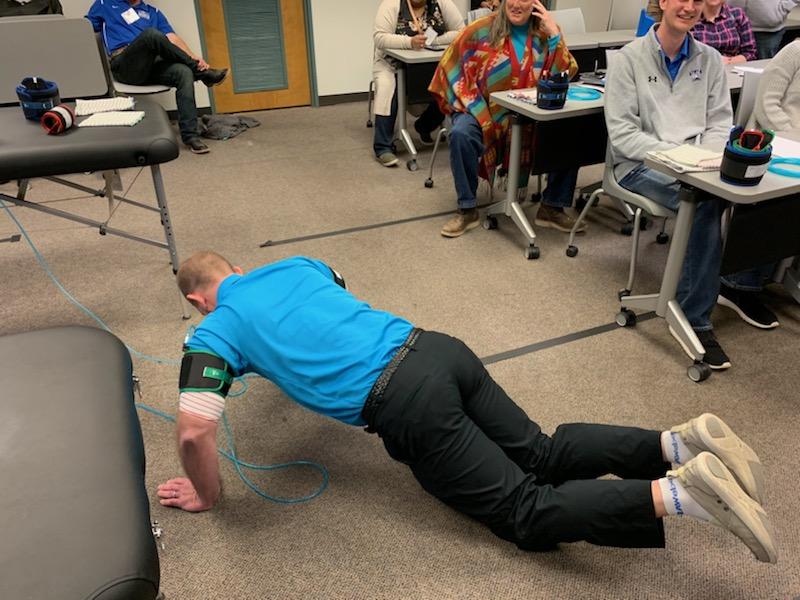
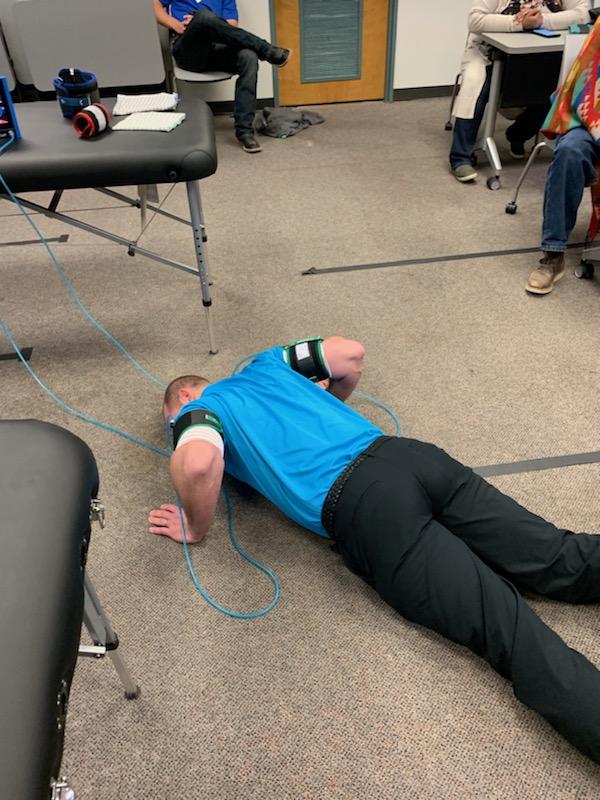
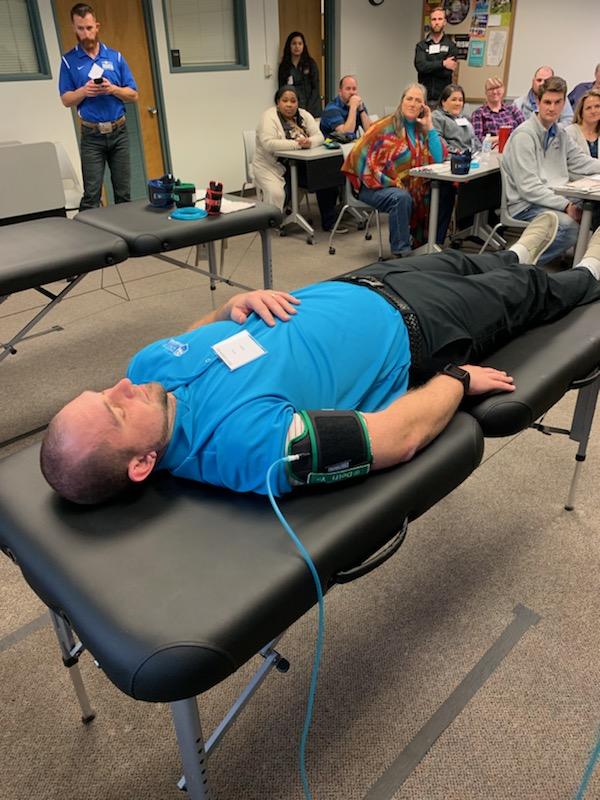
    BFR in Adolescents

    It is the ultimate biohack, but is BFR in adolescents a good idea?

    Devin Kielur DAT, LAT, ATC joins Kyle Kimbrell PT, MPT to discuss procedures, protocols, outcome measures…not just hey this is cool…

    BFR in Adolescents

    Blood Flow Restriction: What contraindications are there?

    It is like a hybrid car – there are two ways two produce energy for movement

    With BFR you are limiting the ability to produce aerobic energy.

    Too much load can be problematic post-surgery

    Open wounds – no BFR

    • With any clotting issues, there should be a doctors clearance
    • Post-op is the target time
    • The first teaching was: wait until the wound was closed
    • With use, there has been less concern with waiting until the wound was closed.

    Hypertension

    Who is administering it?

    What methodology? – you need to have the means to measure the pressure

    Do you need it at all?

    • Encourage the behavior of “Is this going to outweigh the risk?”

    Athletes that do not like having their BP taken.

    Sickle cell and diabetes could cause problems.

    Clotting disorders

    ORS has trained over 8,000 people in the US alone.

    What is the main goal or purpose in using it?

    Devin likes to focus on good sleep, nutrition, hydration, and body awareness.

    How do you decide what load is used?

    We use an RPE scale

    Then use our rep scheme and by the end of the exercise, we need you to be exhausted.

    We found the analgesic side very beneficial – the cuffs seem to settle the pain down

    • Tissue flossing produces a similar effect on the ischemic area and reduces pain…but it should not be counted as occlusion training

    Do these goals change in adolescents?

    Reduce pain

    Limit muscle atrophy

    Repeated inflation and deflations of the cuffs change the hydration of the cell and trick the body into “feeling normal”

    • This would need to occur frequently

    Cuffs allow for movement and walking.

    This allows PTs to space out the sessions

    RPE – 

    Omnires scale

    “I do not want to make your pain worse, but do not tell me your pain.”

    I do not tell them what number I am looking for.

    They give me the number they feel fits

    30/15/15/15 rep scheme with 30-second intervals

    ***use the patient as the guide***

    Initial BFR goal: I want them to be mesmerized by it.

    This means I have set the load up and it seems really low at first.

    We need a continual push for growth to occur

    What procedures or policies would you recommend before beginning to use it.

    1. Measure LOC
      1. Prescribe pressure based on that number
      2. Some companies have not
    2. Document the number for full occlusion 
    3. Document the pressure for each session
    4. Document the length of time the cuff was on
    5. Document the load used
    6. interventions should be supervised with the AT

    Consider the timing of using the devices.

    We are basically lifting heavy so plan with the fatigue levels of the day.

    BFR in Adolescents

    What is the variability of using the device between clinicians?

    Experience can play a role in the use of BFR.

    • This is about equal parts perceived and real
    • Confidence and comfort are kinda contagious

    Have I done enough? – did they complete the 75 reps 2x in a row?  Then I need to increase

    How is the person moving?

    Are they really sore?

    What are they reporting about the interventions?

    Kyle takes girth measurements – within a month I should see some increase in girth size.  This allows me to check their attendance and level of exertion

    We also use this to discuss nutrition and protein intake.

    Watch BFR in Adolescents on Facebook

    https://www.facebook.com/980579115403772/videos/1597911170390829

    Contact Us

    Kyle – kyle@ors.io 

    IG: @kylekimbrell 

    Twitter: @kylekimbrell1

    Devin: Twitter: @kielur_devin

    Jeremy JacksonMrJeremyJackson on Twitter and Facebook

    Sponsors

    Frio Hydration – Superior Hydration products.

    Xothrm – Best heating pad available – Use “SMB” or email info@xothrm.com and mention the Sports Medicine Broadcast

    Donate and get some swag (like Patreon but for the school)

    HOIST – No matter your reason for dehydration DRINK HOIST

    MedBridge Education – Use “TheSMB” to save some money, be entered in a drawing for a second year free, and support the podcast.

    Marc Pro – Use “THESMB” to recover better.

    Athletic Dry Needling – Save up to $100 when registering through our link.
    BFR in Adolescents

    Goal Setting for Patients

    Goal Setting can be awkward…”What do you mean what do I hope to get out of coming here today?”

    I am trying to have a more Patient-Centered Approach to Athletic Training Services, but I have not found a good way for me to ask the questions that the students understand.

    As a licensed AT and practicing PT Daria Oller knows the value of goal setting. She joins Ray Olivo and John Ciecko to try and make me less awkward…Good Luck.

    What is “patient goal setting in rehab”?

    Looking at objective measures

    • ROM
    • Strength parameters 
    • Rep or weight count
    • Pain is an important measure – you can include subjective measures
    • Do not say “the patient will be better”
    • Use the SMART concept
      • Specific; Measurable; Attainable; Realistic; Time-Bound 

    Working on them together

    Recognizing them as a total person

    Continually listening

    How is it affecting the quality of life?

    What is not “patient goal setting in rehab”?

    If you take the patient out of the equation you are showing your ego… “I want the patient back playing in two weeks..”

    A big failure is removing the patient from the equation

    Having coaches dictate when an athlete or parent can return to play.

    Daria: LongCOVID – I want to get back to running, walking, dancing.  I am stubborn and would do them but then was just crashed out.

    How I have asked:

    “What is your goal for today?”

    “What are you hoping to get out of coming in today”

    “What are you wanting to hear after the evaluation?”

    Thoughts on asking these goal-setting questions?

    With kids, it may just be awkward because they are answering them for themselves the first time

    • There are therapy goals and then daily goals
    • They should still tie into what the overall goals are

    John: Relationship building

    • A majority of people will not know what their goals for the day are.
    • What is the real question?
      • Realistically you are talking about the history
      • “How are you doing today?”
      • “What have you learned today?”
    • You use those things as clinicians to help them define their goals.

    Remember the history and relationship with the kid and consider that as you are asking the “goal” question.

    • We do not use a lot of objective goals because we do not have to report it, but they can be useful in motivating.

    “How can I help you today?”

    Ray Olivo – on helping patients set goals for their healthcare

    Continue to ask questions to figure out who they are as a person rather than an injury

    “How can we work together to get you to your goal?

    Daria – the psychosocial is such a huge piece as well.

    Some goal-setting is defined by statements such as: “I want to get on the floor with my kids/ grandkids and play but the pain is preventing it.”

    Trying to document for insurance forces Daria to put all of the pieces together.

    • Are there stairs in your apartment
    • It sounds like you are saying this, this, and this.  How can we work together to get better?

    Example of “Goals” for athletes

    Ankle sprain

    1. Walk pain-free
    2. Jog pain-free
    3. Run pain-free
    4. Practice pain-free
    5. Return to play

    Instead of “Here is what you are going to do today.” 

    Maybe try:

    “Here is what I feel like we need to work on how do think we can accomplish that?

    John – I like to look at it as a department view

    “What are our professional goals”

    • We write them out and put them on the wall and it leads everything we did

    You still need to have a goal as an AT to guide the patient’s recovery.

    Celebrate small goals

    In the secondary setting where we potentially see them every day, what should this look like?

    John – The target – “what is your bullseye?”
    Work backward from the outer rings to see how they get to the bullseye.
    We keep soap notes and rehab sheets out for all of our athletes. Rehab charts are on the back of the soap notes.

    WRITE THINGS DOWN

    Daria – know the target and work out from there
    8 weeks walking pain-free
    So what steps can we use to get you there at 2 weeks, 4 weeks, and 6 weeks?

    Ray– having them see their goal is important
    Let’s take a picture of your ankle daily and compare it
    Or lets video you walking and running
    Each athlete is by appointment currently and they have an agenda for the day.
    Ask them what their plan is

    Other tips for implementing the patient goal setting in rehab?

    Daria: Long-standing pain – the goal is not being pain-free, but finding distractions to keep his mind off his pain.

    Certain hobbies and activities and helping him build those into their life and improving the ability to perform those tasks.

    Ray: There are many ways to do goal setting.

    IT’S ALL ABOUT THE PATIENT

    John: Practice what we preach.

    How are your goals going to help your patient population?

    If you are good at setting your own goals it will show in your practice

    https://www.facebook.com/980579115403772/videos/411065410067494

    Got tips for us?

    Daria Oller – @OnTapPhysio

    Ray Olivo

    John Ciecko

    Jeremy Jackson

    Goal Setting Resources

    Setting Quality Goals – use the promo code “1FreeCourse” to earn some 2 CEUs related to the discussion.

    Financial Supporters

    Frio Hydration – Superior Hydration products.

    Xothrm – Best heating pad available – Use “SMB” or email info@xothrm.com and mention the Sports Medicine Broadcast

    Donate and get some swag (like Patreon but for the school)

    HOIST – No matter your reason for dehydration DRINK HOIST

    MedBridge Education – Use “TheSMB” to save some money, be entered in a drawing for a second year free, and support the podcast.

    Marc Pro – Use “THESMB” to recover better.

    Athletic Dry Needling – Save up to $100 when registering through our link.

    PhysicalTherapy.com; 1freecourse; continued; Physical therapy

    Path to Leadership

    Rick Cox has used the Sports Medicine Broadcast on his path to leadership. Through John's Leadership series Rick has been able to strengthen and improve as a leader in Athletic Training and at home.

    An interesting fact: Rick was wearing his Sports Medicine Broadcast shirt when he dislocated his elbow rock climbing.

    Path to Leadership; Rick Cox

    “The world is always full of the sound of waves. The little fishes, abandoning themselves to the waves, dance and sing and play, but who knows the heart of the sea, a hundred feet down? Who knows the depth?”

    Why did you choose that line from Musashi?

    Well it illustrates a person's path to their given occupation or specialty. (Musashi) 

    We may see the outside but do we ever really know the true path that person took to get where they are now and more importantly, where they are going in the future? 

    Who is Rick? 

    • Year 3 at Suffolk Head AT
    • was satisfied for a while as an assistant
    • Realized that just being part of the staff was not going to be good enough, but he knew he needed to learn.
    • I am constantly questioning “what could I be doing better”

    What started Rick on his path to leadership? 

    • Had no experience 
    • Did a lot of reflection and questioning himself
    • Makes small changes

    How did he do it?

    • A lot of reading, but not focusing on a single person
    • Simon Sinek
    • Ryan Holiday
    • Military tends to lend itself to leadership

    “Football (soccer) is life sped up”

    Life / Athletics and war are not the same thing but lessons can be learned

    You realize people have gone through some tough situations and you are not alone.

    What have been some of the leadership lessons you have realized? 

    There are examples everywhere

    The election is an example

    What are some of the universal truths you have learned?

    Not placing blame

    Honesty

    “Take the blame and give out credit” – Rick Cox

    In my path to leadership, building relationships has been one of my strengths and it has grown our influence with our athletes and coaches.

    Honesty with harshness

    When have you had to relearn the lessons?

    Year on we had a baseball player in the clinic and our Ortho wanted the athlete to go to the ER.

    We were busy and did not communicate with each other and the coach.

    The following day the baseball coach was pretty upset.

    Rick’s first instinct was to place blame, but before he spoke he remembered the lessons…”You are right, we messed this up”

    Have you seen improved relationships on your Path To Leadership?

    Not to the point of being “buds” but there have been improvements

    John busted his butt to build relationships, made progress but then for some reason it reset once the season was over

    It is like building a garden.  You have to replant each year

    What have been other benefits to your Path to Leadership?

    • I am still struggling with this at home and have not been able to transition this to home

    What has been the outcome? 

    • I have become a better clinician
    • I am better as a leader due to this.

    What would you tell a Young Rick Cox?

    • Humility

    Books? 

    Anything by Jocko

    Simon Sinek’s Leaders Eat Last and Start with WHY

    Ryan Holiday’s The Obstacle Is The Way and Ego Is The Enemy

    Dare to Lead – Brene Brown

    https://www.facebook.com/sportsmedicinebroadcast/videos/340721383694562/

    Contact Us

    Rick Coxrcox2@suffolk.edu @Suffolk_AT

    John Ciecko – @John Ciecko

    Jeremy – @MrJeremyJackson

    Encourage them to buy more shirts for you…

    Frio Hydration – Superior Hydration products.

    Xothrm – Best heating pad available – Use “SMB” or email info@xothrm.com and mention the Sports Medicine Broadcast

    Donate and get some swag (like Patreon but for the school)

    HOIST – No matter your reason for dehydration DRINK HOIST

    MedBridge Education – Use “TheSMB” to save some money, be entered in a drawing for a second year free, and support the podcast.

    Marc Pro – Use “THESMB” to recover better.

    Athletic Dry Needling – Save up to $100 when registering through our link.

    Armed Forces Athletic Trainer Michael Hooper; path to leadership; John Ciecko

    Adopted ATs

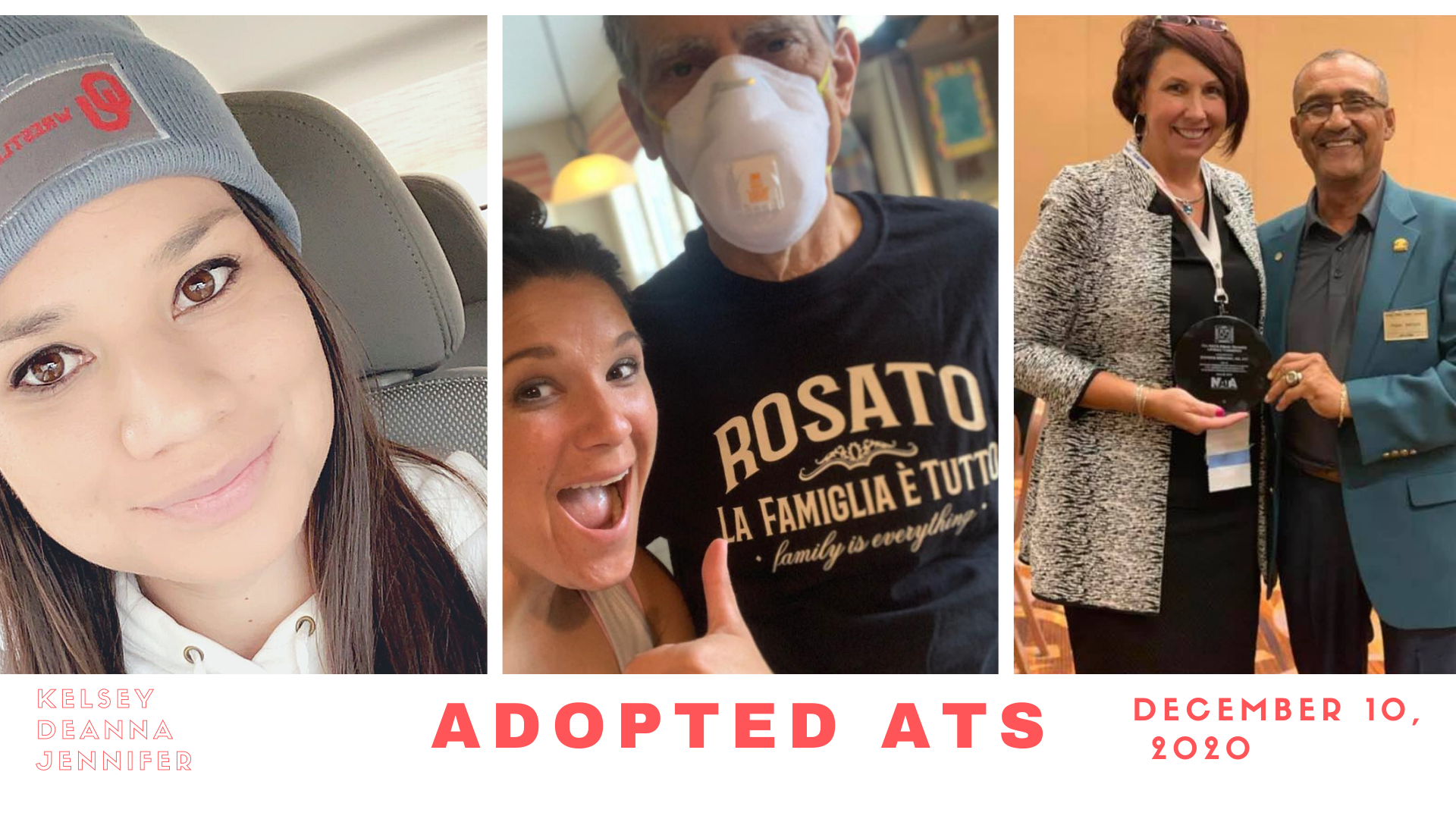
    Deanna, Kelsey and Jennifer, all Adopted ATs, share their stories to encourage others to compassion and action.

    Adopted ATs

    Deanna, what is your Adopted AT story?

    Has a positive story

    Relationships with both of her biological parents

    Knew from birth that she was adopted but did not realize it until age 7

    Searched for her Bio parents because of concerns with her health.

    Maternal Grandparents connected with her first

    Birth dad began connecting

    Since 2011 Deanna has been connected to all her bio and adopted family.

    Kelsey tell us about being adopted.

    “I am still related to my birth family”

    Born to a single mom and taken into foster care at the age of 4.  The CPS workers came to daycare and picked her up that day.

    Placed with aunts and uncles and began playing sports right away.

    Kelsey wanted to be a doctor and then got hurt as a freshman in high school and went to get treated by her Athletic Trainer.

    College would not have been an option if she had not been adopted.

    Jennifer share your Adopted AT story

    Adopted at birth in 1967 from a single mother

    Born Christmas day and was moved through foster homes to help hide the paper trail.

    Jennifer’s mom was a nurse and her dad was a teacher

    Mom took her to medical workshops once she showed an interest in the medical field.

    Her mom passed away in 2008 and her dad began searching for info on her bio mom.

    Has not connected with her bio parents.

    “Mamma Rheeling” has taken children into her home to unofficially foster and give them a safe place to stay.

    Her goddaughter lives with her now

    Adoption opens her up to compassion

    She has always known she was adopted.

    Speak to prospective adoptive parents.

    Jennifer – Being a parent is something that comes from your heart.  It is hard either biological or adoptive.

    If you want to make it work then you will find a way to.

    Deanna – I love God and in turn I love people.

    Kelsey – Fostering can be hard.  There will be trauma

    We would not be who we are today without someone stepping in.

    Watch Adopted ATs on Facebook

    https://www.facebook.com/980579115403772/videos/381220533183664

    Contact us:

    Deanna – dmelancon@brortho.com

    Kelsey – grahamke@pryorschools.org

    Jennifer – jennifer.rheeling@gmail.com

    Jeremy – info@sportsmedicinebraodcast.com

    Sponsors

    Frio Hydration – Superior Hydration products.

    Xothrm – Best heating pad available – Use “SMB” or email info@xothrm.com and mention the Sports Medicine Broadcast

    Donate and get some swag (like Patreon but for the school)

    HOIST – No matter your reason for dehydration DRINK HOIST

    MedBridge Education – Use “TheSMB” to save some money, be entered in a drawing for a second year free, and support the podcast.

    Marc Pro – Use “THESMB” to recover better.

    Athletic Dry Needling – Save up to $100 when registering through our link.

    Adopted ATs

    Earned Leadership

    When I stepped into the “Head” Athletic Trainer role after 12 years here I thought I had earned leadership credibility. I had, it just did not go as smoothly as I assumed.

    Kevin Parker and John Ciecko discuss the book About Face by General Hackworth

    Earned Leadership; kevin parker; john ciecko

    “Personal gifts like intellect or charisma help. But neither are required enough to be a leader. Physical appearance, poise, and outward self-confidence can be confused with leadership – for a time. I saw many new lieutenants arrive to battalions and fail to live up to the expectations their handsome, broad-shouldered look generated. Leaders walk a fine line between self-confidence and humility. People are born; leaders are made.” 

    – McChrystal

    “You can read all kinds of books you want and you can make all kinds of plans you want, but when you get out in the field, those books and those plans might not meet the eye of the situation you find there. So you just have to roll with it.”

    – Hackworth

    Kevin Parker joins again after last seasons Heroes as Leaders – https://sportsmedicinebroadcast.com/heroes-as-leaders/

    1. In discussing earned leadership, what is your favorite part of About Face?

    Kevin – when he took over the battalion in Vietnam and transformed them into a well-oiled fighting machine.

    Everyone wants to be the transformational leader that people write stories about…but this is where you miss the whole point of the book.

    Why a book about war to teach lessons in AT?

    • You take care of your people
    • ID problems and the people to handle those problems…then give them resources to deal with them.

    2. Learning leadership – the wrong way

    “Grab at the coattails.” – p. 60

    The Army was no more warriors than it was clerks trying to get the army out there.

    Rather than earned leadership people surrounded themselves with people that were going to agree and help support your decision.

    There was no one there to help prevent them from not making critical decisions.

    Hackworth’s willingness to accept clear honest feedback is ultimately the best for the organization.

    Be wary of an echo chamber

    “Figures don’t lie.” – p. 601

    300% input of Ranger School…but that was because we went from 0 to 3…

    If you want to lie to get ahead you lose your leadership capital in the end.

    Hackworth was all about not sugarcoating things.  He wanted to clearly disseminate info up and down the chain in the same manner.

    You have to tailor your message to each person, but it’s the same message.

    To the athlete: the outside of your ankle hurts

    To the Doctor: his lateral malleolus is the affected area

    Rehab – do they know what they are doing and why…so you could walk away and they can continue.

    Don’t be that person “he is great at rehab but has terrible bedside manner…”

    DO YOUR ACTIONS MATCH WHAT YOU ARE SAYING?

    “Measuring up” p. 778

    3. Learning leadership – Honesty and morality

    “Study of Vietnam” p. 614

    The tactical know-how of senior officers has ended in a condition of not knowing how to fight but a bunch of corporate office managers.

    The soldiers are focused on advancing to the next level rather than leading the people below them.

    “Never ask a subordinate to do a task you are not willing to do”

    Maybe you show up at 6 am to help with COVID screening a few times

    Does the AD need to be at every practice every day??? Nobody wants that.

    In every organization, there is someone who is promoted one level beyond their competence

    From Facebook: Richard Cox It reminds me of when Jocko would scramble guys' radios to make sure that they all knew how to fix them because he wanted everyone in the platoon to be able to do everyone else's job.

    “Westmorelands understanding from Napoleon.” p. 737

    “The interview – forest from the trees” p. 777

    “Issues and Answers” with Howard Tucker from ABC

    Did the upper echelon of the army ever become changed on the war…did they learn from their mistakes?

    “No” they became paper pusher and analytics and could not see the forest from the trees.

    We were measuring using the death ratio for success.

    You have to have strong moral courage to step up and say “maybe we are not winning”

    LOOK AT THE BIG PICTURE and see there is more going on outside of the immediate.

    One of the lasting lessons Kevin has learned: 

    Kids’ parents like to watch their kids play games…if we can change the game time so their parents can watch them we need to do that.

    “Learn from the past.” p. 831

    4. What have we seen during this time and how can this book (or ones like it) shape our learning curve of leadership?

    Anytime you can go back and have an understanding of how and why a decision was made you can see how changing just one step could have changed the course of action.

    It is easy to make decisions when there is an unlimited amount of time and resources…but that never happens.

    “Can you make a decision without having all the variables and info you need?”

    https://www.facebook.com/sportsmedicinebroadcast/videos/1513778832163017/

    Contact Us

    Kevin Parker – @kparker9200

    John Ciecko – @JohnCiecko

    Jeremy – @MrJeremyJackson

    Keep the “lights” on:

    Frio Hydration – Superior Hydration products.

    Xothrm – Best heating pad available – Use “SMB” or email info@xothrm.com and mention the Sports Medicine Broadcast

    Donate and get some swag (like Patreon but for the school)

    HOIST – No matter your reason for dehydration DRINK HOIST

    MedBridge Education – Use “TheSMB” to save some money, be entered in a drawing for a second year free, and support the podcast.

    Marc Pro – Use “THESMB” to recover better.

    Athletic Dry Needling – Save up to $100 when registering through our link.
    Data Collection and Epidemiology

    Data collection is pretty easy now a days with all of the EMR options. We have plenty of data, but making it tell a story is different.

    Scott Mullett founder of AT Efficiency has crunched our numbers so we can show you what you can do with them.

    Daria Oller has researched epidemiology and wants to help turn those numbers into actionable items so that we can change the patterns of injury.

    How our Data Collection is answering Admin Questions.

    Dollar Value saved the district:

    1. Ask your stakeholders what numbers they want to see.
      1. The cost of injury for athletes that have gone to the hospital to receive some treatment is $709
      2. Direct cost $168,000
      3. Indirect cost $527,000
        1. There is not a value or cost for them not participating as they are not getting paid to play
        2. These costs are associated with parents' missed work and transporting kids to doctors.
        3. Who are you saving money for?
          1. In high school, it is parents, not the district.
      4. Only 9.9% of injuries at the Penn state campers were sent to the hospital
      5. Healthy Camp studies show 60% of injuries go to the doctor
      6. ADD a “requires doctor visit” button
      7. Document people who went to the ER and the outcomes.
        1. This could be used to help establish a chain of care to get the kids the appropriate care they need.
      8. They increased salary due to the research from the Penn State camps

    Treatments per week or day or month:

    1. Average of 300 interactions per month

    Does your Data Collection show preventative practices?

    1. Add an indicator saying “prevention” to improve data collection
    2. This may take a few years of data to see if the numbers are going up and down.
    3. You can also compare to national research
    4. WE NEED an incoming freshman onboarding program to prevent injuries.
      1. Educate the coaches
      2. 7/12 football concussions were freshman
        1. Maybe head impact monitoring could help

    How debilitating are the injuries

    The way our data collection was set up is hard to tell.
    – We do have a “Requires Surgery” button but do not always click it.
    – We do not have a graded severity scale
    – We will add the “Time Loss” button to our daily treatment logs

    A few questions we could not answer with our Data Collection

    • Costs of supplies per kid for strength and conditioning versus rehab
    • Other services provided
    • Athletic Training Facility hours/visits per week in healthy versus non-healthy athletes

    Tips and improvements from Scott and Daria

    Tips from Scott: 

    • Some of the gaps: narrow it down with preventative programs
    • Start small
    • Get little victories
    • Demonstrate the importance of staying healthy

    Tips from Daria:

    • Establish your goal(s).
    • Have clear operational definitions.
    • Have objective measures to quantify prevention strategies.
    • Look to the epidemiology literature.
    • Go beyond large numbers. 
    • Consider if your documentation system is helping you capture the needed or desired variables.

    Watch instead on Facebook.com/SportsMedicineBroadcast

    https://www.facebook.com/sportsmedicinebroadcast/videos/407100297119732/

    Contact Us

    Daria Oller

    Scott Mullett

    Jeremy Jackson

    Resources

    “The First Decade of Web-Based Sports Injury Surveillance: Descriptive Epidemiology of Injuries in US High School. . .” J Ath Train. 2018 53(8) – 53(12), 2019 54(1) – 54(2). 

    Non-Time-Loss and Time-Loss Softball Injuries in Secondary School Athletes: A Report From the National Athletic Treatment, Injury and Outcomes Network (NATION). J Athl Train. 2020;55(2)

    Injury Incidence in Youth, High School, and NCAA Men's Lacrosse. Pediatrics. 2019;143(6).

    Trends in Emergency Department Visits for Contact Sports-Related Traumatic Brain Injuries Among Children – United States, 2001-2018. MMWR Morb Mortal Wkly Rep. 2020 Jul 10;69(27)

    Work-Related Injury and Management Strategies Among Certified Athletic Trainers. J Athl Train. 2018;53(6)
    Catastrophic High School and Collegiate Cheerleading Injuries in the United States: An Examination of the 2006-2007 Basket Toss Rule Change. Sports Health. 2019;11(1)

    Share your gratitude with the Sponsors for the SMB

    Frio Hydration – Superior Hydration products.

    Xothrm – Best heating pad available – Use “SMB” or email info@xothrm.com and mention the Sports Medicine Broadcast

    Donate and get some swag (like Patreon but for the school)

    HOIST – No matter your reason for dehydration DRINK HOIST

    MedBridge Education – Use “TheSMB” to save some money, be entered in a drawing for a second year free, and support the podcast.

    Marc Pro – Use “THESMB” to recover better.

    Athletic Dry Needling – Save up to $100 when registering through our link.

    McDonald; Dermoneuromodulation; Medbridge; CEUs Online CEUs; affiliate link

    Conflict Resolution

    Conflict Resolution is a learned skill. John Ciecko was scared of conflict. By leading the leadership series here on the SMB we have walked through a lot and conflict resolution is a big part of leadership.

    Patrick Ohaver was a supervisor for an AT outreach program and had a fair share of conflict to resolve.

    This discussion is based off an article by Dr. Jordan B Peterson about becoming a peacemaker

    Facts are facts. Opinions about the facts differ. It is therefore the job of the peacemaker to bridge the gap between opinions, and in that manner, bring about reconciliation. The job of the peacemaker is to establish an accord that allows the facts themselves to become a matter of agreement. To do that, however, the peacemaker has to be able to see the facts that lead to peace. The peacemaker threatens, with the threat of peace, because peace means change.”

    – Jordan Peterson
    Conflict Resolution; peacemaker; primates; Jordan Peterson; Leadership
    https://images.theconversation.com/files/138826/original/image-20160922-22533-1a7n230.jpg?ixlib=rb-1.1.0&q=45&auto=format&w=754&fit=clip

    How can the peacemaker bridge sides of an argument?

    How can the facts themselves differ? And if they do differ, how can the gap between men who have adopted antagonistic stances towards one another be bridged? They must want peace, more than security, more than charisma. That means that the peacemaker must be able to sell them something more valuable than victory, more valuable than success. That means the peacemaker must know what it is, that is more valuable than victory. It is for this reason that the peacemaker must be a man of the uncharted seas.”

    When we find ourselves in conflict how can we sift through the facts?

    John’s situation: Coach was asking questions and seemed to be questioning him and how the situation was handled.

    John allowed his opinion of the facts to be more important.

    “Relax” usually amplifies the conflict

    Amygdala hijacking – emotions get the thought process all jacked up

    Is it better to rush or be patient with an opinion or judgement?

    “Everyone must therefore have a voice.  The peacemaker, however, must even listen to the damned. He does not know what the facts are, and even the damned might therefore have something valuable to say.  When the facts themselves are in dispute, however, there is nothing left but patience. The invisible becomes visible of its own accord, in accordance with its own frame of time, and there is no pushing when the direction to push cannot be established.” 

    Everything in athletics has to be done right now…so we are in conflict with peacemaking situations as we have no patience to work with.

    We do not have to fix it now, we can wait for a day.

    The more you are able to pull the facts out the more you can heal.

    The facts give it a direction

    When it comes to resolution is speed over vision, or vision over speed more important?  


    “Peace must therefore be a journey – and a journey to an unspecified destination. The peacemaker is a guide, in a country whose topography remains uncertain. As a guide, he has to be going somewhere – but where? Speed is a virtue in the local environment. If the direction is uncertain, however, then speed may be a vice.”

    Most of the time it is vision over the speed

    Clifton’s strength finder – https://www.gallup.com/cliftonstrengths/en/252137/home.aspx

    If you are pretty certain route “A” is better than route “B” than use facts and allow hem to make the decision

    If you continue to go back and use the vision over speed you build capital with the people you work with.

    This allows you to use the get this done now statements.

    What does it take to become a true person of conflict resolution?

    “The man with a disharmonious household cannot serve as a peacemaker… The man who is afraid of war cannot serve as a peacemaker. Peacemaking must be a vocation, and not an occupation.” 

    Peacemaking can not be your job title, but it needs to be part of your life.

    Vocation – a strong feeling of suitability for a particular career or occupation

    Occupation – a job or profession

    What is the importance of both empathy and sympathy? 

    Empathy – the ability to understand and share the feelings of another

    Sympathy – feelings of pity and sorrow for someone else's misfortune or understanding between people; common feeling

    Closing Thought:

    “‘I fear not the man who has practiced ten thousand kicks once, but I fear the man who has practiced one kick, ten thousand times.’ Conflict resolution must be a skill that is practiced over and over knowing that it will never be perfected.” 

    Facts lead to peace

    https://www.facebook.com/sportsmedicinebroadcast/videos/1234729040219399/

    Contact Us:

    John Ciecko – @JohnCiecko

    Patrick Ohaver – @patc1996

    Jeremy Jackson – @MrJeremyJackson

    2020 Leadership Series Lineup

    Leading Up the Chain

    Conflict Resolution

    Earned Ledership

    The Path of Leadership

    Support those who love ATs

    Frio Hydration – Superior Hydration products.

    Xothrm – Best heating pad available – Use “SMB” or email info@xothrm.com and mention the Sports Medicine Broadcast

    Donate and get some swag (like Patreon but for the school)

    HOIST – No matter your reason for dehydration DRINK HOIST

    MedBridge Education – Use “TheSMB” to save some money, be entered in a drawing for a second year free, and support the podcast.

    Marc Pro – Use “THESMB” to recover better.

    Athletic Dry Needling – Save up to $100 when registering through our link.
    MioTech

    Native American ATs

    Muriel, Wyatt, Marisha, Jasmine and Alyssa are Native American Athletic Trainers. They join John Ciecko and Jeremy Jackson to teach about their background, stories, and experiences.

    Muriel's Native American Background:

    I attended several undergraduate programs in my journey. I was a non-traditional student who returned to pursue my undergraduate in 2009 at the University of New Mexico-Gallup branch campus. After I completed my AA-Assoc. of Business Administration, I transferred to the main campus in Albuquerque, NM in 2013. There I completed my BS in Athletic Training in May of 2018 with a minor in Business Administration.

    During my undergraduate journey, I managed to work a full-time job, have my two boys who are now 9 and 15 years old, and take care of my family of four. It was certainly difficult trying to juggle being “Mom, Wife, Student AT” all at the same time and commuting weekly back and forth to home, but I knew ever since I was about six or seven years old Athletic Training was what I wanted to do, although at the time I had no idea the profession existed

    Alyssa's background and schooling

    My last two years of high school introduced me to my first Athletic Trainer (JD Burgess). A late tour senior year to Fort Lewis College introduced me to Athletic Training/Sports Medicine as a major so I immediately applied and began my education at Fort Lewis College in Durango, CO. I graduated in 2007 and was able to pursue my Masters at A.T. Still University in Mesa, AZ. I graduated in 2009 and went back to Durango to work at the Head AT at Durango High School as a part of Mercy Regional Medical Center. I stayed there until 2015 when my husband and I took a year off to travel and move back to Hopi. After that I set up an AT program at the local high school.  There have been a lot of road blocks

    Marisha's Life as a Native American

    Marisha Little, LAT, ATC currently works as the graduate assistant to the University of West Florida Athletic Training Program and as a PRN athletic trainer in the Sports Medicine Outreach department of Andrews Institute. She graduated with her Bachelor of Science in Athletic Training from the University of West Florida and is currently working on her Master of Science in Health Promotion. She is the recipient of the Bobby Gunn Award from the Southeast Athletic Training Association, the Legacy Scholarship of the Athletic Trainers Association of Florida, and the Memorial Scholarship of the Southeast Athletic Training Association. Marisha served on the National Athletic Trainers Association Student Leadership Committee from 2018-2019 and currently serves on the Public Relations and Marketing Committee of the Athletic Trainers Association of Florida.

    A little about Wyatt

    Wyatt's first exposure to AT was in undergrad as a potential PT student.  Changed paths when he was applying for PT school.

    Masters of public health from GWU

    He left the tribe to get the experience off the reservation to be able to get more perspective.

    Currently back on the reservation as a wellness program specialist for Native Americans.

    Jasmine's Story:

    Descendent of trail of tears

    I come from a long line of strong, resilient, compassionate, indigenous women, so it was only natural that I want to help others.  When I was in high school, at Culver City High School, we had a sports medicine program and I was introduced to the field. I went on to get my AA in Kinesiology at El Camino College and then graduated in 2016 from Azusa Pacific University with my BA in Athletic Training. My career started with working for West Coast Sports Medicine and Team to Win, which is a non-profit sports medicine clinic for the local high schools, that are typically in under-served and systematically oppressed communities. I then started my life at Lawndale High School as the ATC.

    After my first year there, with the help of my Principal Dr. Rodas, Athletic Director Demetre Howard, and Football Coach Travis Clark, established a sports medicine pathway and program and offer a sports medicine curriculum for the biomedical careers academy and have over 250 students enrolled. We currently have one of the best Sports Medicine programs in the South Bay.

    Being the ATC at Lawndale changed my life, it made me want to be a better person for my athletes and students because they deserve greatness from the people around them, they became my motivation. Our football program won a CIF state championship in 2018, I was awarded CIF Athletic Trainer; Champion of Character for 2018/19, and I received the Far West Athletic Trainers’ Association Excellences in Athletic Training award in 2020. I am now the coordinator and program director for the sports medicine education pathway and sports medicine apprenticeship/team we have

    Cultural experiences with medicine

    • Other Cultural Experiences
      • Navajo
        • Largest landmass reservation
          • About the size of West Virginia
        • Honor and value kinship
        • Always at the forefront of what we do
        • Known for basketball
        • 40% have no running water, less with electricity and internet
        • We live by a concept of balance 
          • When this gets out of balance we see much more illness
          • Restore balance by getting up early, running to the east, ceremonies, running to the east
        • Over half of the Navajo tribe does not speak the native language because of assimilation.
        • Living in two different worlds is difficult as some of the older people do not feel she is “Navajo enough”
        • Ingenious framework
        • Maternal lineage society
          • Clan type society that essentially makes your extended family your family and builds a close-knit group
      • Hopi
      • Muscogee
    • My experience with medicine and culture started before I started my education in AT and my career. My family has influenced a lot of my “whys”, I have two examples. 
      • Respect to Quality of Life
      • Assuring Pt comprehension and understanding
    • Traditional Ceremonies/Beliefs
      • Kinnalda, Solar Eclipse 
    • (Alyssa) As Hopi, we have our traditional medicine men/women that help with a variety of mental, spiritual, and physical maladies. It is not customary to pay them money, but rather with food (nova) and cornmeal (homa).
    • (Alyssa) Personally, I didn’t have much experience until my freshman year of high school when I broke my ankle. Along with a visit to IHS which wasn’t a great experience, my mother arranged for me to see a medicine man to “reset” my ankle. Very painful and then I received a cast and had no other medical help with rehab/return to sport. 
    • (Alyssa) Our families continue to use Medicine Men/Women for treatment, I don’t know much about Navajo but rely on the athlete/family to keep me updated about what they can/can’t do. The same goes for Hopi, but the very good ones know when to send them to me or IHS for more orthopedic. 
    • (Jasmine) works with many Polynesians at work as well. Tongan doctors and medicine is important for her population
      • Her tribal understanding has made the inclusion and relatability much easier
      • “For your body and practice, what do you need to do?”
      • Prays for her students and asks her ancestors to guide her to best care for her students
    • (Wyatt) – uses a holistic approach and connects the mind and body.
    • (Muriel) – with head injuries, the Navajo will pour water on the ground to shift the energy and try to reset the balance.
      • Teams will go together before a season and have ceremonies together
    • (Marisha) – you may speak to an older person in the third person…instead of “you have this injury…” one might say “if a person has this injury…”
      • In Navajo culture, if you say Grandma when addressing a patient you are showing respect
      • In western medicine that is possibly offensive

    College experiences with western medicine

    • Anatomy Lab
      • (Alyssa) College/Grad School was my first experience with cadaver lab anatomy and physiology. We have some taboos about dead bodies so I went to my grandma (So’oh) to ask about what I should do. She explained that since I was doing this as learning to help others, it was ok to do, but try not to touch. Luckily, both my teachers were very understanding and allowed me to observe and let my classmates do movements for me. I had to cleanse myself, spouse, and the apartment every time I got home with cedar smoke (momahpi) and cedar wash (boiled cedar water). 
    • (Alyssa) When I was in Durango, I experienced what it was like for families that had good insurance. We were spoiled as we had two Orthopedic Surgeons that did visits to our school and when they needed to get seen quickly, all I had to do was call. We also had access to a school health center with an NP on-site as well as several Family Physicians. This was something I never saw at home on the reservation.
    • (Jasmine) We learn the routine basics, core classes, AT classes, etc. I think one in order for us to be good at our jobs we need to be understanding of western medicine. But we also have to be willing to learn about other cultural medicine. When it comes to my practice we focus on a lot of mind and body experience; refocus before treatment, we do breathing exercises and have a conversation focus on what the patient's body is telling them and then reinforce the idea that whatever we are doing will improve their well being. My AT education incorporated a lot of other styles of medicine; eastern medicine for example. I had a professor Bill Ido tell us all the time; “treat locally, but look globally” What is really wrong with the patient. We incorporated a lot of cupping, essential oils, incorporating anti-inflammatory foods into the athletes' diet. We have to embrace our cultures and other cultures and accept the fact that sometimes western medicine isn't always the correct method, it's subjective (Jasmine)

    Current job and AT experience

    • Alyssa
      • Part-time AT at Hopi Jr/Sr High School (2016-current) l and created a Sports Medicine Club (2019) at my hometown high school on the Hopi reservation.  I have another full-time job as a Parent Educator.
      • Arizona Athletic Trainers Association Secondary Schools Committee Member (2019-current)
      • Native ATs Discussion Group (2020)
      • Head AT Durango High School (2009-2015)- responsible for over 23 sports and three different venue sites. Proctor for Fort Lewis College student ATs. 
      • AT Still University (2007-2009)- Various GA Assistantships at a city public high school, private high school, and sports performance clinics. Was able to cover the NABI basketball tournament and be a speaker for youth (2008).
      • Fort Lewis College (2003-2007)- Women’s basketball student Athletic Trainer senior year
    • Jasmine: Athletic trainer for TTW and Children's Hospital of Los Angeles; CTE Sports Medicine Program Director

    Things I should know when working with a Native American

    • Family Oriented- Strong family ties
    • Athletes sometimes work with Traditional Medicine People, or Shalman’s and so we have to be mindful that they can’t do certain things or ask about treatments they may have received? For example: 
      • Navajo way – they remain revenant sometimes for four days, so this may mean they can’t be at practice, or they can attend but not allowed to participate. Just varies from each athlete. 
    • When working with anyone from a different culture or race we first need to check our own implicit biases we may have about that culture or identity, and then be culturally sensitive, ask lots of questions beforehand and understand that you may need to incorporate traditional medicine people or medicines into your practice. Be open to learning about other medical practices
    • (Alyssa) Many students are shy and need to take some time to talk to you
    • (Alyssa) Hopi still practice our cultural traditions and our ceremonial calendar runs from Jan-Nov as a part of the solstices. It is very common for athletes, coaches, and staff to miss school/practices when we have many of our dances/ceremonies. In February, we have our Purification time (Powamuwa) where all the villages are busy so the schools offer Cultural Days every Friday to accommodate all the students/staff not being at the school.
    • (Alyssa) Working with Navajo and other tribes students are affiliated with is asking what they are comfortable with and making efforts to be respectful of different beliefs.

    How has COVID affected your nations and how have you been able to help?

    • Alyssa – there are alot of considerations
      • It takes us an hour to fill our tanks and 3 tanks to fill our cistern…we have to haul water in and 20 seconds of handwashing might not be feasible
      • Maybe have kids shower at school to improve water usage
      • They do not have any full functioning grocery stores without driving to a city
    • Jasmine – took it as a call to action to bring awareness to the situation with her people.
      • She was told “if it does not meet a social media agenda then it wont pick up steam”
      • She decided to teach her students about it and that has brought about change inside her school
    • Marisha – You can still make a difference wherever you are
      • Stand in solidarity with her tribe.
      • Multi-generational housing
    • Muriel – experienced a lot through COVID
      • Became a pharmacist delivery agent
      • Used her AT connections to help guide her community in education and contact tracing
      • “57 – hour lockdown” have prevented some people from being able to get the supplies they need

    How can we help advocate for Native Americans?

    • Wyatt – educate yourself and advocate for equal rights
    • Muriel – reach out to someone in a similar situation
      • I want to be a mentor to our upcoming youth
    • Marisha – being aware and education; collaboration
      • Navajo water project
      • National missing and murdered women and children https://www.csvanw.org/mmiw/ 
      • Bi-culturalism is a real gift
      • We are looking for people to connect with
      • Education is not solely our responsibility, it has to come from the top and the bottom
    • Jasmine – Educate and advocate
      • I do not want our culture to be unheard
    • Alyssa
      • We have learned how to balance living in both worlds.
      • I had to learn how to look people in the eye
      • There is an assumption that all native tribes are the same…

    Call to action:

    • (Alyssa) All Native American ATs need to come together to show our youth, especially on the reservations, the wide world of Sports Medicine. There are so many professions to pursue that our tribes need and we have to not be scared to be the “first” or “only” in those professions. I am unfortunately used to being the only Native in a lot of AT and Sports Medicine circles. I want that to change, I want to see more faces like mine, not only in the AT profession but in leadership roles as well.
    • Join the Native American Athletic Trainers Instagram group
    • Or the Native American ATs Facebook Group
    • Or the Native American Athletic Trainers video chats
    https://www.facebook.com/sportsmedicinebroadcast/videos/376973596775441/

    Contact the Native American ATs

    Muriel – mktsosie06@gmail.com, FB:Muriel Tapaha-Tsosie, IG: @runsmallsrun

    Alyssa – tuwawisnom85@gmail.com

    Wyatt – wwhitegoat12@gmail.com

    Jasmine –  jasmine_velasquez90@yahoo.com @jasvelasquezatc 

    Marisha – MRL41@students.uwf.edu

    John Ciecko – @JohnCiecko on Twitter

    Sponsors

    Frio Hydration – Superior Hydration products.

    Xothrm – Best heating pad available – Use “SMB” or email info@xothrm.com and mention the Sports Medicine Broadcast

    Donate and get some swag (like Patreon but for the school)

    HOIST – No matter your reason for dehydration DRINK HOIST

    MedBridge Education – Use “TheSMB” to save some money, be entered in a drawing for a second year free, and support the podcast.

    Marc Pro – Use “THESMB” to recover better.

    Athletic Dry Needling – Save up to $100 when registering through our link.
    Psychological Risk Factors for Injury

    Shauna Ericksen is doing her Ph.D. work on the Psychological Risk factors that contribute to injury.

    Eli Kassab joins the Sports Medicine Broadcast again as we discus mental health.

    Psychological Risk Factors for Injury; Shauna Ericksen; Joshua Tree

    Shauna, you are quite active and adventurous, what are some of the ways you stay active?

    I was moving from Oregon to Montreal and decided to make a mountain biking trip out of the journey.

    Moab is legendary and so we decided to do it. Coming down off a boulder I got off balance and landed on a tree hanging over the cliff. Sprained my knee in the process.

    Did a self-evaluation and realized I needed to ride down the mountain.  I had to cut the trip short, luckily I was headed to work an AT event where my colleagues evaluate the injured knee.

    What got you into the Psychological Risk Factors of injury prevention?

    Shauna joined a free course online to grow her mindfulness and improve happiness.

    Shauna had been asked to deliver a mindfulness talk to her colleagues.

    It is all about the history of our stressors (upbringing, previous injuries, health, nutrition)

    Has the mindfulness translated to your practice?

    It helps in her coaching and one on one strength training.

    It allows her to pick up on emotion and open up the dialogue.

    Allows them to critically think about and process the stresses

    “How is work going at home”

    “Are your parents able to help?” 

    “I traveled around with a hypnotist for a summer”

    Halloween at the theme park -> went to a hypnotist show

    Shauna was the volunteer

    Mom ordered some hypnotist CDs

    Mom offered Shauna’s assistance

    Then traveled with her for a summer.

    She may have been one of the biggest influences in the career choice and style of treating athletes with a mental IQ.

    Making it commonplace to talk about emotions was huge for me as a practitioner

    “Why can you not just tell me something is wrong” – coaches treat them differently when they are injured or hurt physically or emotionally.

    I have seen athletes go from 0-100 in their head really quick…oh no, I’ll never play again…

    Let’s not skip straight to the end of the book and read chapters 1, 2, 3.

    We need to use our tools to help them focus on the here and now.

    We have to be cautious with our playful banter and acknowledge their perceptions.

    Encourage them to be open and honest with their emotions about the injury.

    How are you using that in your practice as an Athletic Trainer?

    It is extremely important for us as ATs to look at mindfulness.

    It is not everyone’s strong suit but we can learn to be emotionally mindful

    Teach them to express their factors without being judgemental.

    We need to practice mindfulness and good mental health practices.

    Discuss some of the more interesting/shocking finds 

    Last year I wrote a critically appraised paper and submitted it about the psychological risk factors.

    4 constructs and how they correlate to injury outcomes.

    Some research has ID’ed at-risk athletes but are geared towards all athletes not just the ones at risk.

    The realm of intervening to reduce injury risk is all new.

    video, cognitive awareness, imagery are tools used to help reduce injury.

    Overuse injuries are the most common associated with Psychological Risk Factors.

    How long was the research for that paper?

    Started in January and submitted in July

    Have you seen anything with COVID and Psychological risk factors?

    It has changed a lot, data is not as accurate since people are not playing sports, not exposed to the AT staff, practicing on their own

    The initial thought would be reduced injury risk due to lower volume.

    Instead, we shifted to treat this as an official offseason to train them to use mindfulness, sleep, eat, and hydrate properly.

    There is a catastrophe mindset and we do need to implement the mindfulness.

    My biggest goal is going to be how can I help other AT to incorporate these into their injury practices.

    Data shows this works if you do the work, in the beginning, the athlete will be healthier longer.

    https://www.facebook.com/sportsmedicinebroadcast/videos/2460339824267080/

    Contact Us

    Shauna – IG: mvmt.matters

    Eli Kassab –  IG: elikassab 

    Jeremy – IG: Sports Medicine Broadcast

    Financial Partners

    Frio Hydration – Superior Hydration products.

    Xothrm – Best heating pad available – Use “SMB” or email info@xothrm.com and mention the Sports Medicine Broadcast

    Donate and get some swag (like Patreon but for the school)

    HOIST – No matter your reason for dehydration DRINK HOIST

    MedBridge Education – Use “TheSMB” to save some money, be entered in a drawing for a second year free, and support the podcast.

    Marc Pro – Use “THESMB” to recover better.

    Athletic Dry Needling – Save up to $100 when registering through our link.
    PhysicalTherapy.com; 1freecourse; continued; Physical therapy