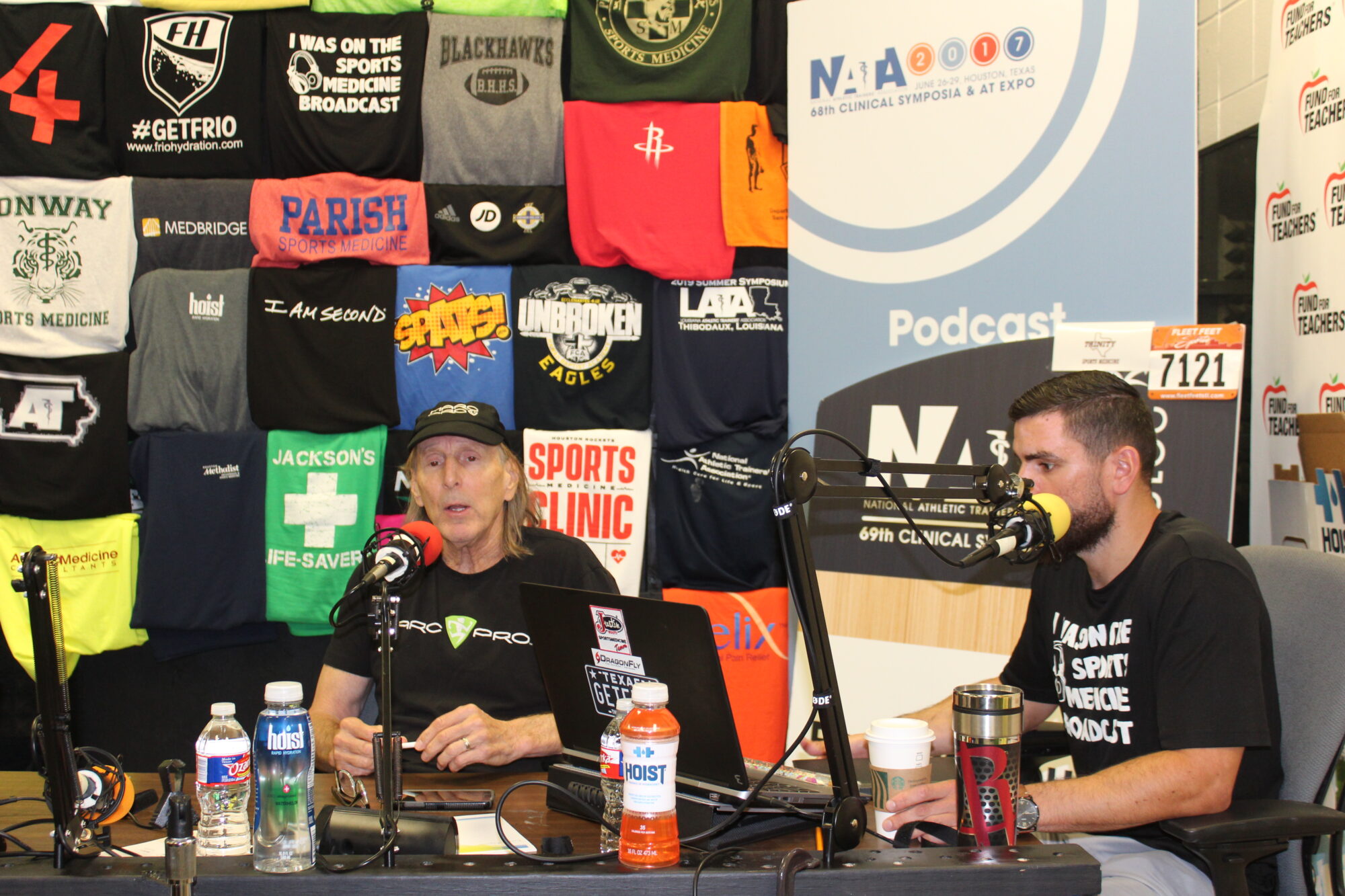
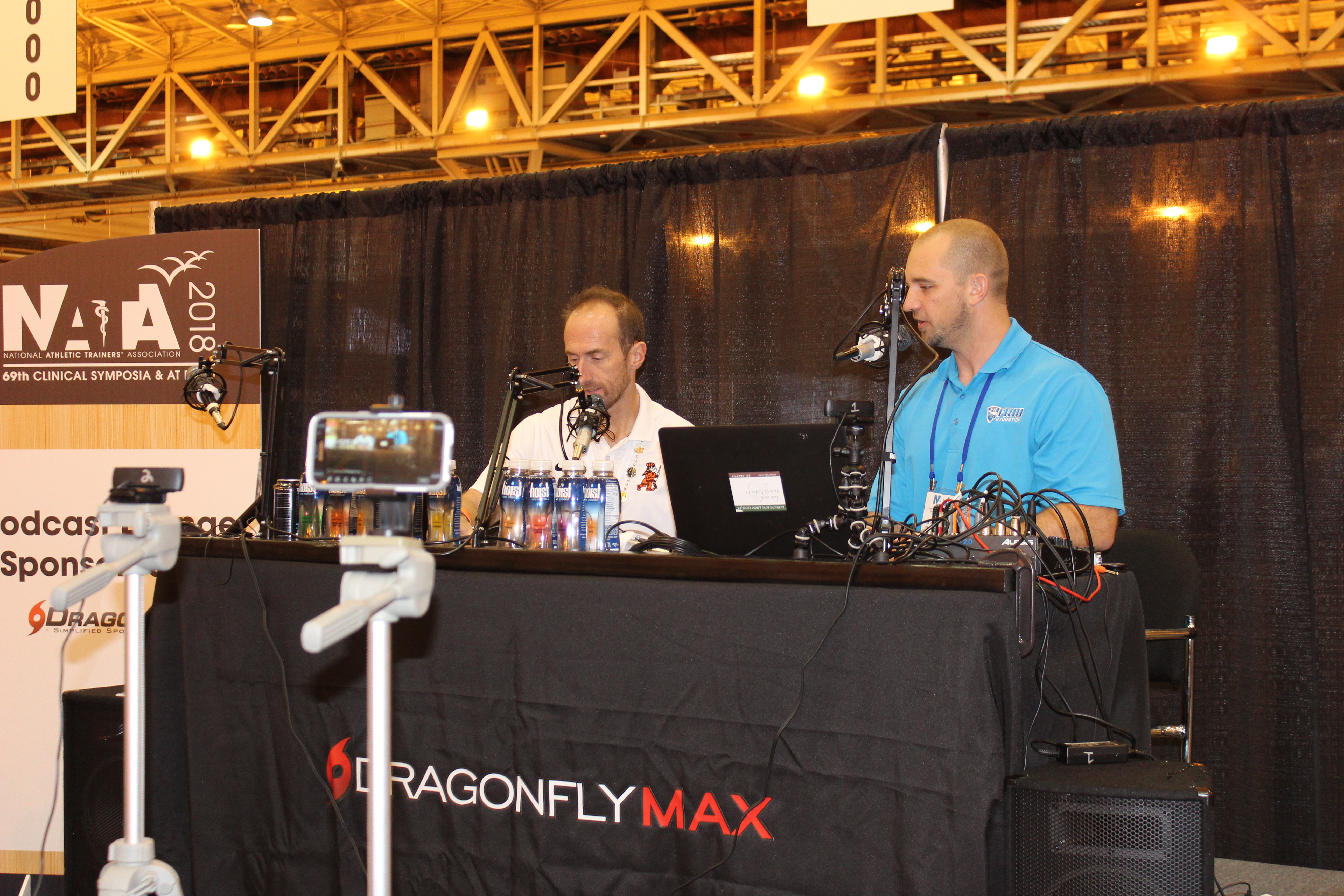
Storytime with buzz is just that, fun stories from an old school Athletic Trainer still practicing. Thanks, Bethpage Consulting for helping to get the SMB out to SWATA 2023 in Arlington.
I have been attending SWATA for about 38 years
I broke my collarbone playing football and then became the team manager. Sam Aguilara came to teach the coaches about Athletic Training products. I knew I could do the stuff he was showing the coaches.
The next thing I knew they were sending me to AT clinics at colleges.
I have met a lot of great people during my career as an Athletic Trainer
Joel Kregerberg was the assistant AT for the Oilers while I was an intern. I got to tape Earl Cambell. He greatly deflated my ego when he told me it was the worst tape job he ever had.
Give me some more storytime
Houston Rodeo got me started with Justin Sports Medicine and Truman Spoon Sports Medicine
Did you get autographs?
Not really, I was always around the people and did not consider it.
Where was your first job as an AT?
Seminole High School is about an hour from Lubbock.
I moved to Macaney with the head coach
Then the Houston Oilers called and I moved to Houston
Take us back to Seminole HS
I taught driver's ed in the morning.
It is a small school with a small AT Facility
We were really good at basketball and gymnastics
I taught a job at the Air Force base with firemen and nurses
Who are some of the mentees that have impacted you?
Valerie Tinklepaugh-Hairston – with her impact on college sports and SWATA
David Traylor – SWATA Hall of Honor
Southlake Carroll High School is being run by two of my former ATs
TSATA Hall of Honor
This award brings a smile to my face every time I think about it.
What did you dream about being as a kid?
My dad was a pharmacist
My brother was a pharmacist and MD
I thought about following them
Storytime – What sticks out the most?
A Houston Oiler went down and was basically numb from the neck down
We backboarded him
That was his last game to ever play.
He was a good friend of mine.
My wallet and everything I needed were in my bag that the equipment managers packed up since I went to the hospital with him. We almost got stranded in Kansas City.
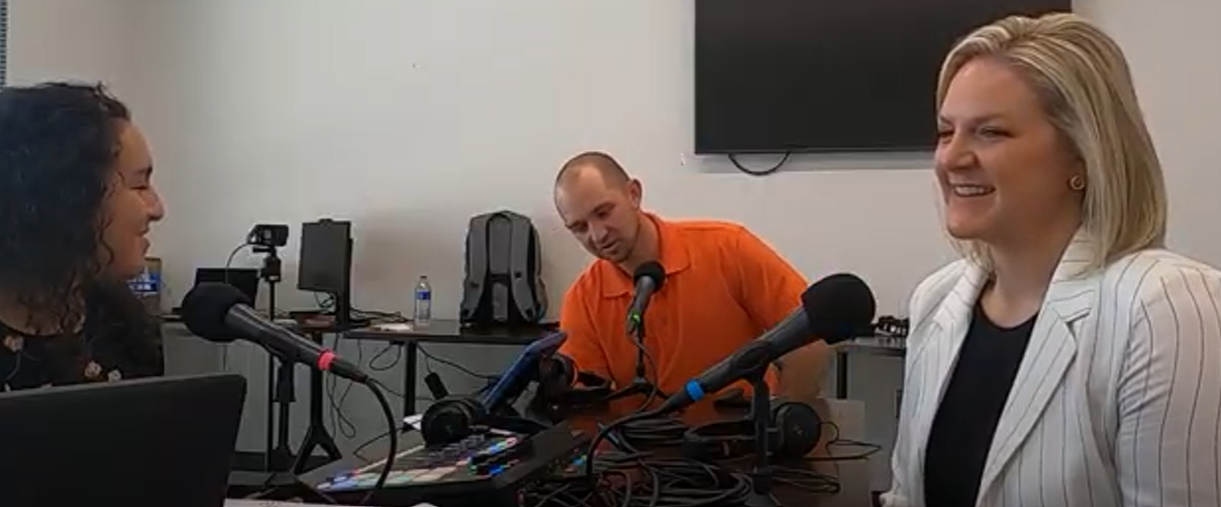
Career Advancement brought Bre'Layshia Alexander from working intermediate athletics to her current role with Baylor Scott and White. She discussed this all with Joseph Eberhardt live at SWATA 2023.
Sponsored by San Antonio Sports Medicine
What are the goals of the Career Advancement Committee?
Chaired by Bre’Layshia
Split from the young professional committee
7-12 years in the profession
Everyone on our committee presented at SWATA 23
The Career Advancement Committee also hosts a scavenger hunt for prizes to increase engagement.
Concussion technology has come a long way in helping us understand and manage concussions. Dr. Summer Ott discusses some of the options available and who they best fit.
Hot Springs Arkansas is the place to be in July 2024. Keith Shireman and the Arkansas Athletic Trainers Association will host SWATA outside of Texas for the first time in years.
SWATA is the largest attended district meeting.
Next year Keith and the team in Arkansas hope to make SWATA 2024 the newest record holder for SWATA attendance.
QCollar seems like just another gimmick…but this could really be a life-changing tool. Dr. David Smith, inventor of the Q-Collar joins me to discuss the story, how it works, and his book When Heads Come Together.
Where did the idea for the Q-Collar start?
Dr. Dave was presenting at the Army Research Lab in 2008 where they threw down the gauntlet complaining that clever people should “figure out Traumatic Brain Injury.”
I was working on wound care.
When presented with the woodpecker I immersed myself in the anatomy and physiology of cavity animals.
During a yawn, you are occluding your jugular.
When getting FDA clearance, what were some of the harder questions you had to answer?
42 patents
We are the only FDA-approved TBI prevention device.
Is there any concern with extended use, like several hours at a time?
FDA recommends 4 hours.
We lay down to sleep for 8 hours at a time and occlude our jugulars.
When Heads Come Together – this is a more detailed story about your journey to “solve” TBI…discuss the book.
Julian Bailes listened to me and encouraged me
Discuss the rebreather and how you can reverse TBI.
We looked at how a giraffe breathes
In the first 10 minutes after a concussive event, there is a critical issue
We partnered with Dr. Jedd Hardings at Cinncinatti
Spreading depolarization
I told him CO2 was the trigger for the depolarization
They raised the CO2 levels of a legally brain-dead patient in a coma. The family agreed to try this and 4 hours later he awoke from his coma.
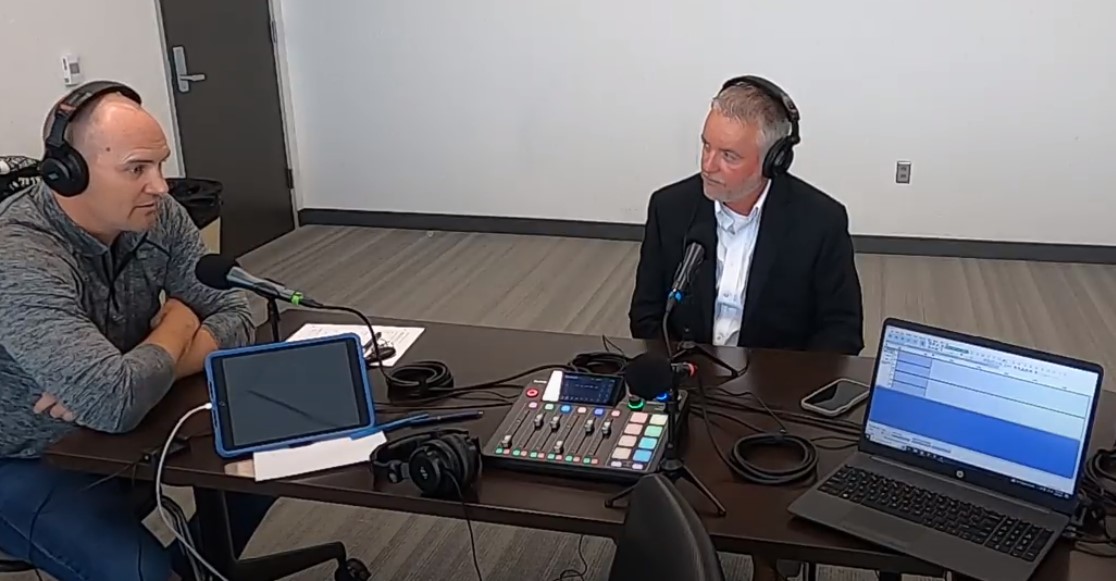
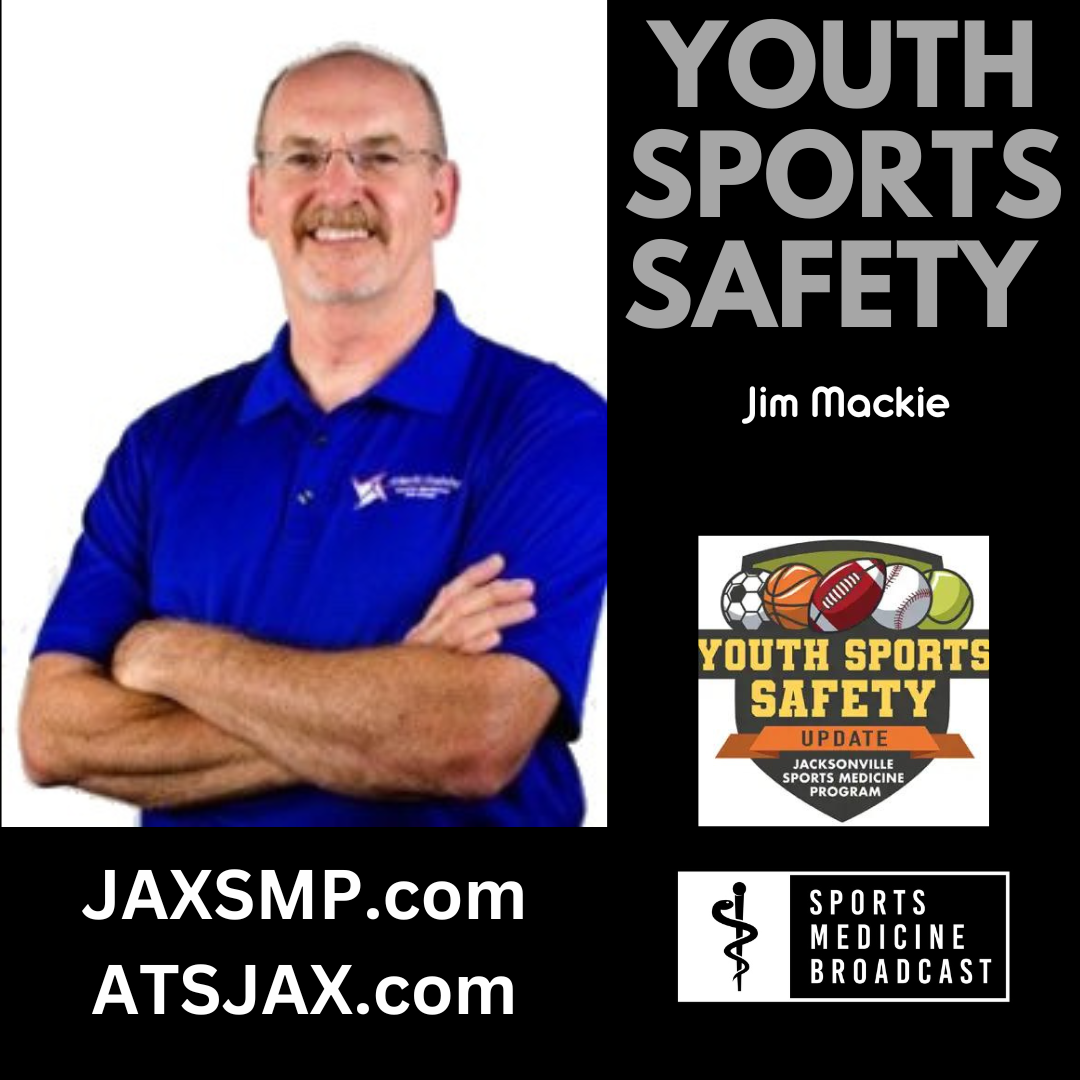
Youth Sports Safety is Jim Mackies passion project. With over 50 years working as an AT, he can sit back and turn the profession over to the younger crowd, but instead, he continues to give time and effort to help improve healthcare for all athletes
Mr. Mackie have you ever had to perform CPR?
Had a coach drop dead on the goal line after a game.
As I am headed that way I see the firetruck pulling out, and this was before we AEDs readily available.
Jim, What is happening in Youth Sports Safety?
Florida is # 1 in sport safety but much to be done. Laws re Concussion, CWI, AED, EAP, etc. but much education and compliance are needed.
There are a lot of causes or task forces, why did you choose Youth Sports Safety?
Obviously, there was a big void legislatively & in the knowledge base. Allows me to put many years of experience back into the community to advocate and educate.
Where is it headed?
Progress is being made but we have to see more implementation of best practices done consistently. With many schools without an AT there requires more district education, especially in our rural communities.
What roadblocks are we seeing?
Resistance and slow to change the culture, especially in youth leagues. Many are volunteer-driven and they rely on what their personal experience was and not best practices as well as the effort it takes to implement.
We have discussed social media a lot recently, what role does it play in Youth Sports Safety?
Podcasts can help to educate and influence the public. They see a lot of situations that happen and yet are dismissed or diminished in a 24-hour news cycle.
We have been opportunistic and gotten some really high-profile doctors and Athletic Trainers.
Call to action:
Take the time to educate kids, parents, and coaches on the best practices. Raise the expectations of those you entrust your child to at their sports venue. Take the steps to create a venue-specific EAP, learn CPR, have AEDs accessible everywhere, and connect with an AT.
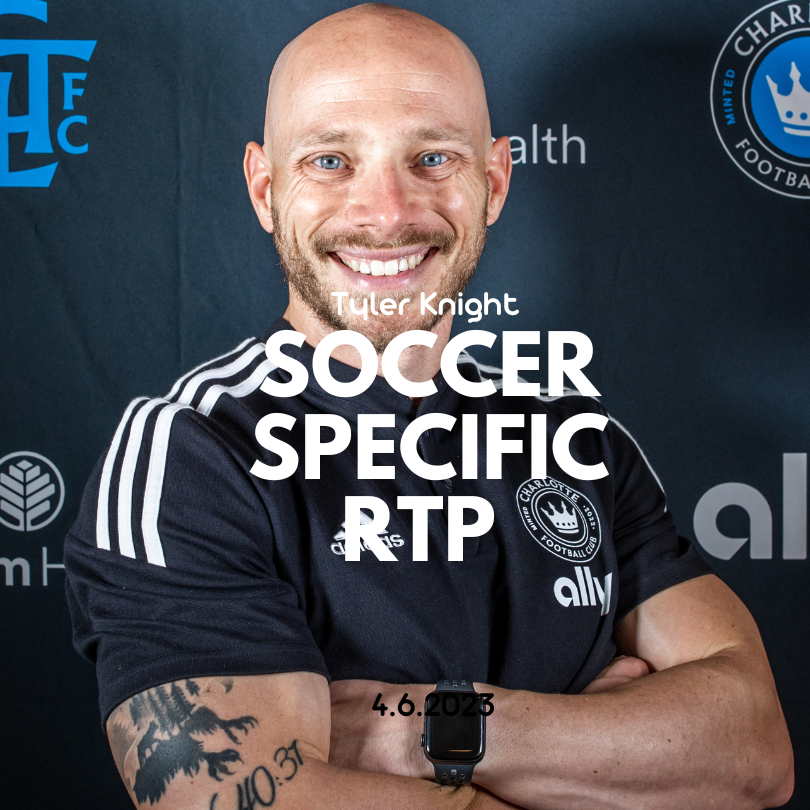
Tyler Knight shares some Soccer Specific Return To Play or RTP tips and tricks. With nearly a decade of soccer experience, he has seen a lot of growth in sport-specific rehab plans.
What is the least soccer specific rehab exercise you have seen?
Almost everything we do…discuss the importance of understanding the ‘why’ of what we do, as well as never forgetting components of movement.
Isometrics because the patient can’t perform much more
Eccentrics once able
Stretch-shortening cycle
Unloaded → supported → unsupported
“Train movement not muscles”
What do we need to consider in on-field RTP?
In order to get to the field, you have to get out of the Athletic Training room first.
Treat the person, not the athlete or the injury (reference all that people have going on in their lives). Ron Corson-ism
Good communication, setting expectations, and appropriate planning are MUSTs.
Individualization (based on person, position, and injury)
Consider our two biggest protective capacities and build upon those early: strength and endurance
Programming based upon working zones (importance of ESD)
Quantifying internal vs. external load
To do that, we have a few basic rules at Charlotte FC:
1. Create a safe environment.
2. Don’t hurt the person.
3. Be aggressive without breaking rules 1 and 2.
KPIs to provide direction and accountability to the process
Additional principles of rehab to accelerate and enhance what we do on the field:
Move early, move often.
Highlight BFR and isometrics.
Don’t mess it up.
Consider tissue healing times.
Periodize manual therapies, incorporate things the person believes in
Break down the phases of healing (acute, subacute, remodeling), as well as the places of healing: table, Athletic Training room, gym, field, and everything in between.
Create time for mental or psychological recovery
KPIs
Mobility
Stability
Function
Power
On-Field
Consider position, individual needs, team tactics, and demands of the sport…and MAKE IT FUN
Players have the ball only 3% of the time, a good reason to emphasize the incorporation of the ball and fitness/drill exercises that place focus on getting into the right spaces
In 2019/2020 EPL season, the highest average number of passes per game was 688 (Man City; approx 62. per player) and the least was Burnley at 333 (approx. 30 per player).
Paul Bradley research
Consider control – chaos continuum
Reverse engineer and use the prospective loading document
When we have elevated AC ratios, did the majority of that come from a more controlled environment or chaotic environment
By using fatigue, you can increase chaos (for those athletes limited in what they can perform)
How are you going to account for one of the most unique facts of the game: limited substitutions and, potentially like many other sports, the pace of the game is only increasing
Actual loading
Link load with the context of how it happens in a session/match
TD, HSR, sprint, ACC/DEC, HMLD or explosive efforts
Intensive vs. extensive days (can you match what the player is doing with you to what the team is doing; team schedule, RPExduration)
Density of high intensity actions (repeated sprint ability and repeated high intensity efforts in 1, 3, and 5 min blocks)
In the secondary setting, we may not be out on the field for practice. How can we help coordinate RTPs?
“It takes a village.” Educate, incorporate, and empower those around you. If we all understand the why, we will know how to do it, and what we need to use to get there. Trust is a major factor here.
Create a PowerPoint document, have illustrations, don’t be afraid to do the math ahead of time, use a stopwatch.
Let's talk through a RTP plan you use and why:
The war is won and lost in the mind
Briefly recap where we are and where we’re going
What can we do to prepare, potentiate, desensitize, or address other movement qualities before we hit the pitch; build time and trust with people
Individualization:
Needs assessment to construct rehab or movement plan:
Current injury
Previous hx of injury
Quality of movement (identify areas to fine-tune)
Training history (gym)
Movement and ability restoration
Major proponent of push-pull movements or complex training (plyo-like), also appreciate avenues to incorporate lumbopelvic hip stability (core transferring F)
External load
Average weekly load in training
Average match load
These are BUDGETS, it’s science AND art
If they aren’t close to being on the field, what are we going to do to reduce that gap (RPE x duration; off legs conditioning, gym, etc.)
On-Field
4 levels
1: high control
Band 1 ACC/DEC, no HSR/sprint
2: medium control
Band 2 ACC/DEC, add HSR, no sprint
3: low control to low chaos
Band 3 ACC/DEC; add sprint
4: medium to high chaos
Add density to exposures
Drill selection
Technical
Tactical/passing
Position specific
**all interspersed with position specific running**
MAS, ASR, or loading focused
How can we get players out of rehab the same care and joy others get from playing the game
Revisit the plan often to show progress
Change the setting
Make it fun, do what you can with them
Week
Monday: introductory day
Tuesday: small to medium space
Wednesday: large space
Thursday: treatment only
Friday: small to medium space day, slightly more than re-intro