Have you tried installing Patient-Reported Outcome Measures into your practice as an Athletic Trainer?
“PROMs just tell a story” – Dr. Lam
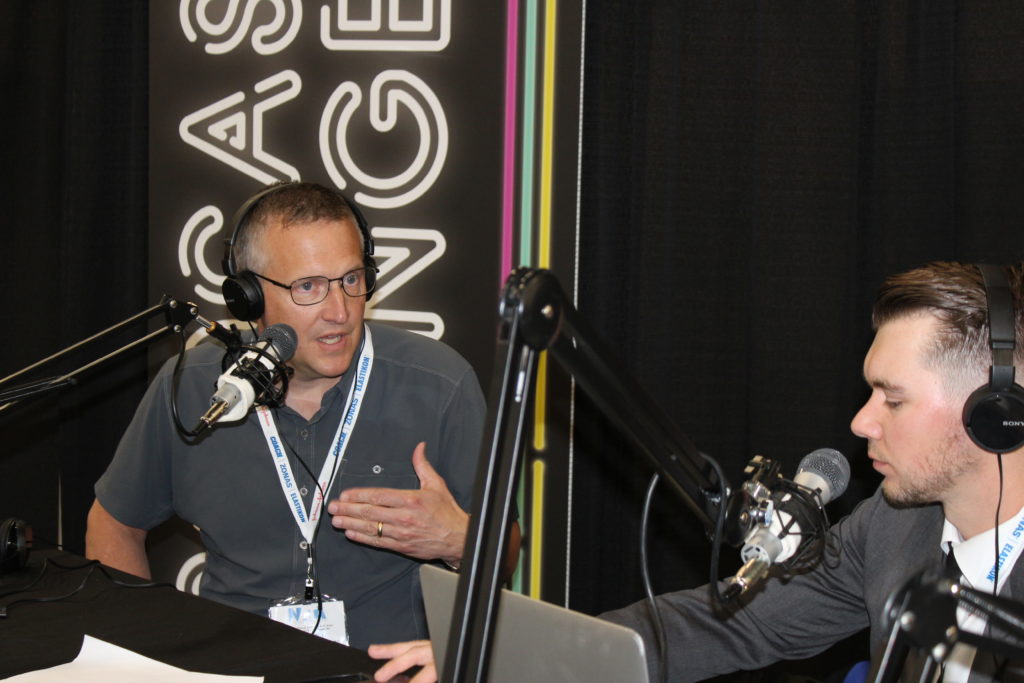
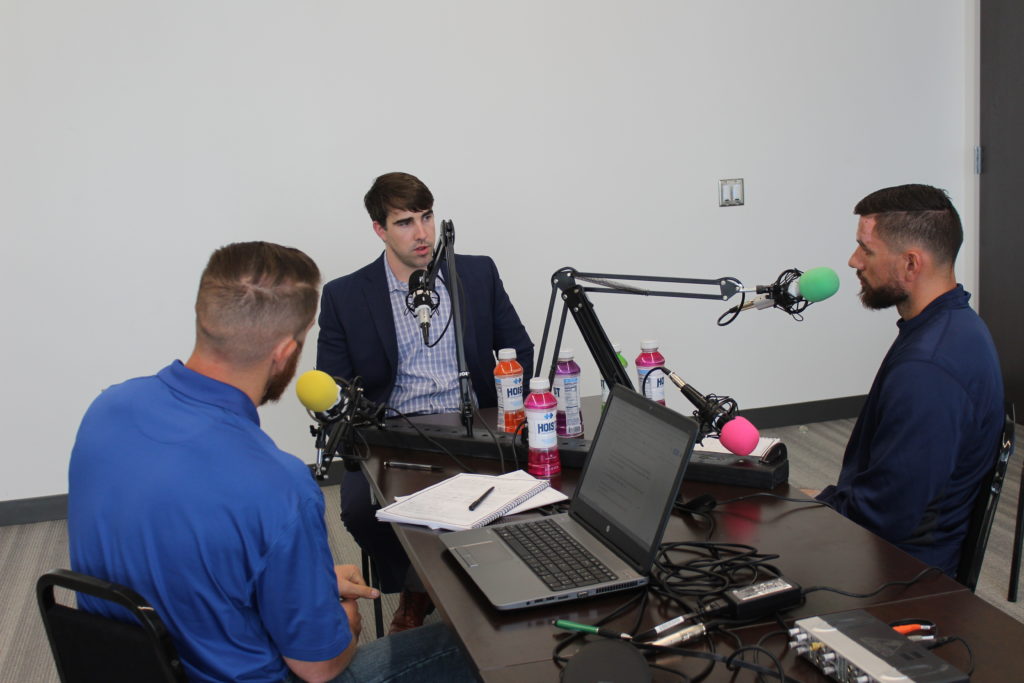
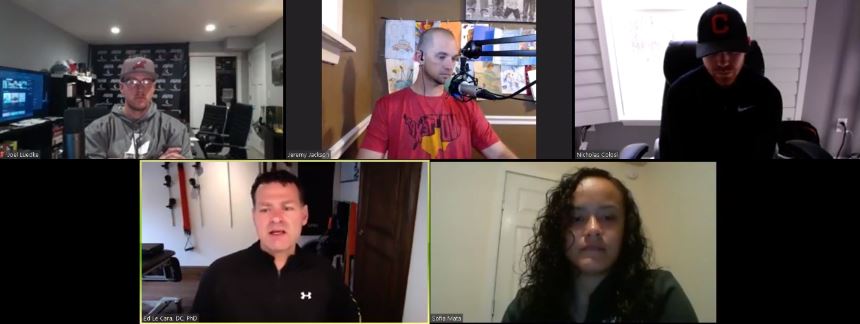
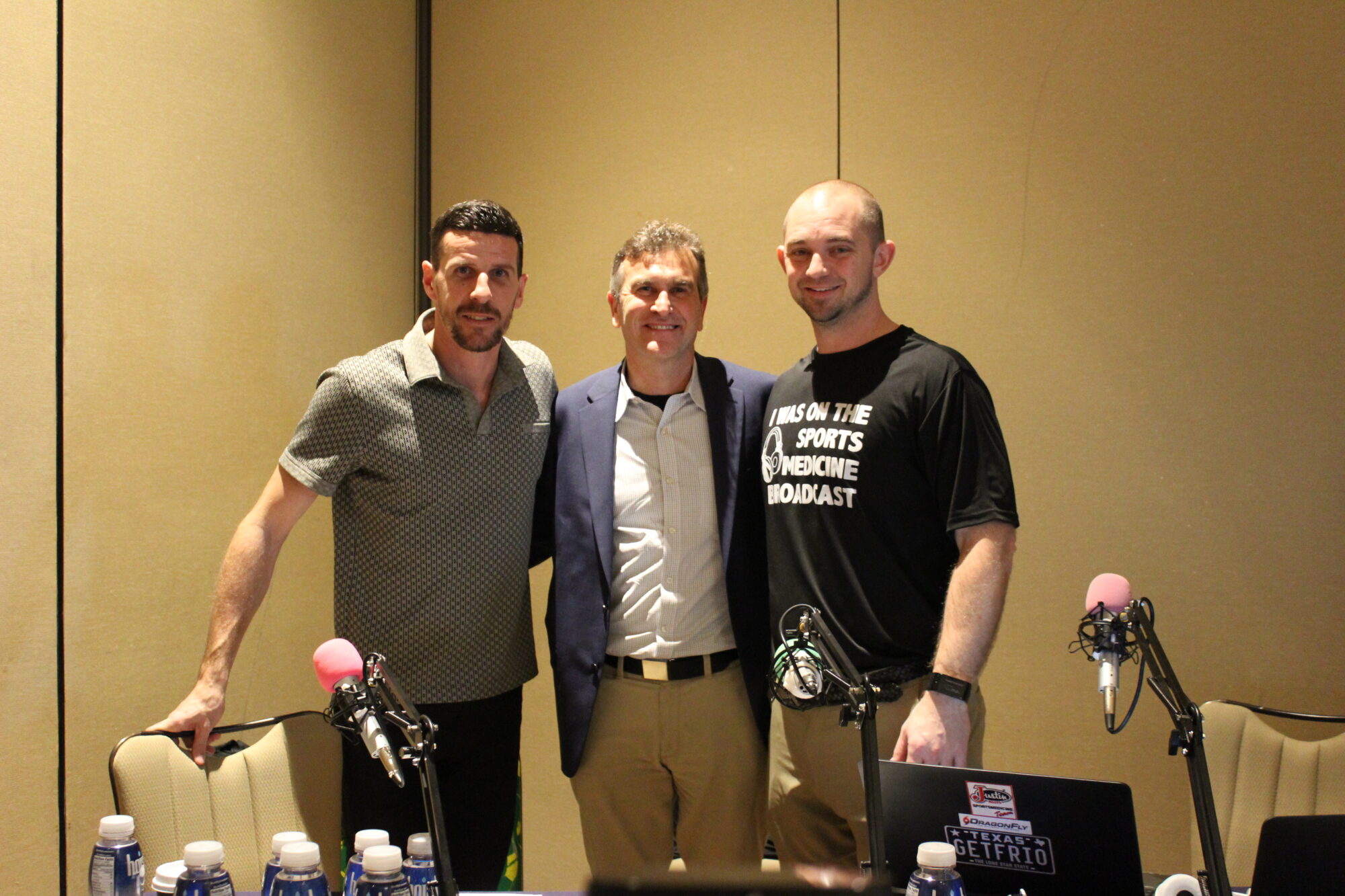
Brian Columbe from Texas Luthern University and Dr. Kenny Lam join the Sports Medicine Broadcast today to help discuss what they are and how we can add them to our practice to add value to our services. This podcast was at the request of Ryan Pena, long time listener and Athletic Trainer in Dallas ISD
What are PROMs or Patient-Reported Outcome Measures?
Ever wondered what it is like to have a Chinese Olympic Experience…and then get interrupted by a global pandemic/
Adam Stoyanoff joins John Ciecko to share his odd path to working with the Olympic kayaking team of China.
Where did Adam get his start?
I have been fortunate to observe and be part of many different things…some may seem wrong, but that is a closed-off perspective.
Assistant coaching at Boling Green University for 3 years – spent time with all sports
Worked with local high schools as a contract S&C coach
Then went out on his own as an independent contractor with 2 high schools and college.
This increased his diversity and ability to adapt his skills.
Then went to Boston to lead an afterschool program for 2-5th graders – larget challenge as you have to keep changing to keep them interested.
Learned it was important to keep contact and build relationships with parents so the kids and parents are doing and talking about the same thing.
Next job was to Dallas, Texas
Opened his eyes to see “there is always a reason why”
Did not spend his life thinking “How can I build my resume?”
He got a phone call from the Chinese canoe association that was training in Waco, about 1-2 hours from Dallas. That lead to him becoming a coach more than a coordinator.
Juataga Portugal was their training site and also made the canoes they were using.
Lived on the training compound with the athletes
More about his Chinese Olympic Experience
Coaching vs coordinating
Coordinating is more like the AD role – dealing with all of the wants and needs
It will stress your relationship building skills
As the coordinator, you are in a service position and making sure everyone has everything they need and want.
“Rocky 4 was a documentary right?” – John Ciecko
But really that is what life is like, someone is always watching you and videotaping
You should always act as if there is a camera on you. Even in your moments of weakness.
“What are you doing when nobody is looking – definition of Integrity”
You have to stop, observe and listen to understand why a person may be acting a certain way
Chinese athletes are taken out of school at 12-13 years old to be an athlete.
Lessons Learned
The coaches who are and were doing well put their ego aside and were there to serve and help.
Calm and stillness with a few deep breathe
Do not take it personally when a Serbian coach yells at you for setting a plate down to loud and disturbing their athlete.
He was working with professional athletes…professional kayakers who wee making millions
I can get you that info, I need to find the best way to get that to you safely.
Krampade claims to stop cramps through science. John Ciecko, Sofia Mata, and I provide some anecdotal evidence.
Our experience with Krampade
Jeremy –
Tasted it. it tastes and feels like cloudy or salty water should.
I have never had an athletic related cramp so I can not vouch for the effectiveness
My wife tried it to validate the Menstrual cramp claim. She honestly hated it but she is not an active athlete or intense workout person.
My boys will drink it but it does not go down smooth.
With a little getting used to it i think players could get past the salty taste.
Jeremy's Athlete
Senior Male soccer player with a serious history of cramping during games.
he felt the product helped prevent him from cramping but drinking the whole bottle of water + Krampade left him feeling heavy.
With some fine tuning in intake and nutrition I think the athlete could really benefit from the product.
Sofia's experience
Personal – had a hard time drink it due to the salty nature. Did not feel the menstrual cramps were affected by drinking it either.
Sofia's Athlete using Krampade
Varsity female soccer player goes down with cramps. Sofia administers the Krampade and within minutes the athlete is back up and running like nothing happened.
John Ciecko's thoughts –
One swig in and one swig out…if you are not ready for the saltiness then you will spit it back out like he did.
Contraindications –
Heart or kidney issues check with your doctor
Dietary contraindications –
nope…but two 4ks back to back will create osmotic diarrhea
We are ordering Smart Cuffs by Smart Tools to provide Blood Flow Restriction training to our patients. Sofia has taken the course and we are excited to add this tool to the high school. First, we have some questions for Nick and Ed.
“BFR is the ultimate biohack and tricks your body into “thinking it is doing a heavy load without the heavy load”
Ed LeCera
Talk about the Gen 3 BFR cuffs that are fully automatic.
Gen 1 cuff in 2017 was kinda a POS
But they quickly learned that was not best practice
Multi-chamber system does not allow for limb occlusion.
The new systems are single chamber which are much more effective.
5 sizes of the cuffs that are over 4 inches
External doppler was chosen because it is close to the computer monitored systems
SmartToolsPlus is focused on taking what the expensive units do and making it affordable and compact.
Currently Two models of Smart Cuffs: commercial and consumer
It auto measures the LOP
3 steps, inflates in 45 seconds
The manual model is available, but the system auto senses occlusion and auto shuts off.
Keep it connected for autoregulation of pressure.
What is in Level 1 Smart Tools Training?
Level 1 is a rehab or clinical-based training that is from scratch.
It focused on getting the cuffs on and doing a hands-on workshop.
Discuss the recommended frequency and duration of treatment.
It depends on the goal.
You can train multiple times per day as there is not any damage being done
One study showed D1 basketball players – 11% increase by using the cuffs on walking programs.
2-3x per week is as effective over the long run
I always have to ask about my elderly parents and grandparents. How can Smart Tools be used with them safely?
Ischemic preconditioning – getting ready for surgery and being under a tourniquet
Cellular swelling protocol is great for reducing swelling. As the limb starts to swell from the cuff, then the cells start to reabsorb the fluid which leads to muscle protein synthesis without the muscle damage
Study done in 2016 on myodural bridge and its connection to post-concussive symptoms, may suggest that treating suboccipital musculature early on may reduce post-concussive headaches and/or other symptoms.
Neck strengthening and conditioning – 6-9 min
Neck girth and strength = reduced impact to the head and neck
Strength exercises must be done in all planes!
“The effects of rest and treatment following sport-related concussion: a systematic review of the literature”
The study revealed that soccer females wearing headgear had greater head acceleration compared to males who had a slight decrease in head acceleration. This suggests that headgear may not be appropriate for all athletes.
Measuring Neck Strength – 10 min
“Neck Strength: A Protective Factor Reducing Risk for Concussion in High School Sports”
This study showed that “smaller mean neck circumference, smaller mean neck to head circumference ratio, and weaker mean overall neck strength were significantly associated with concussion.”
Vestibular balance is also treatable – 15 min
BESS/ Sway app / Force plate
Balance work = decreased risk of lower body injuries relating to prior concussions
Vestibular-ocular – 17 minutes
“Does it feel unstable to you?” “Rocky boat”
Are they experiencing vertigo?
Increased s/s if they were previously experiencing motion sickness
Vestibular-ocular issues are a “major source of fatigue, headaches, and cognitive problems
Vestibular Ocular Motor Screen (VOMS);
smooth pursuits, horizontal and vertical saccades, horizontal vestibulo-ocular reflex, near point convergence, visual motion sensitivity
Home exercises; Eply/Brandt-Daroff exercises and gaze stabilization
Beginning vestibular therapy at two weeks will greatly impact and help during post concussion recovery
Training for professionals in vestibular rehab techniques is available
CAUTION!
v-o issues may cause difficulties while driving, showering, and going downstairs
Baseline assessments can be viewed as more of a luxury than a necessity.
Computerized testing;
Impact, C3 Logix, and CNS Vital Signs
Important qualities needed;
“Appropriate psychometric properties, interpretation by a qualified professional, and an appropriate environment and motivation are key factors.”
They can be more useful in RTP clearance than as a diagnostic tool.
Symptom Reporting – 31 minutes
Post-Concussion Symptom Scale can be helpful in individualizing treatment and rehab.
Psychological / Emotional – 33
Some individuals experience;
Increased anxiety levels and withdrawal (missing school, work, sport)
Depression and Poor sleep (may cause an increase in s/s)
Autonomic Dysfunction – 34 min
Damage of the long fibers that connect the brain stem and midbrain to the cortex which cause dysfunction in communication.
This is an imbalance of the sympathetic and parasympathetic nervous systems.
Signs and symptoms of Dysautonomia:
Orthostatic hypotension
Diaphoresis
Blurred/double vision
Photophobia
Bowel problems
Exercise intolerance
Feeling winded
Insomnia
Dizziness
HR (tachycardia/bradycardia)
Tunnel vision
Weakness
Vertigo
Brain fog
Many cardio-vascular responses in concussive patients are altered.
Assessment – 38 minutes
Ways to assess autonomic dysfunction; orthostatic BP/HR (lying and standing), exercise intolerance, Valsalva maneuver (baroreceptor functioning), HRV, head-up tilt table.
Buffalo Concussion Treadmill Test (BCTT), assesses “physiologic measures of ANS to help differentiate if post-concussive symptoms are physiologically based.”
Take away –42min
After about 48hrs you can begin manual treatment of the head and neck.
After about 72hrs, if the symptom checklist has decreased, you may begin a controlled exercise program.
Begin treatment in the EARLY recovery phase.
Incorporate neck strengthening as a concussion prevention tool.
A concussion is a multi-system and functional injury that requires comprehensive evaluations.
Watch the video recording of Concussions Are Treatable
Matt Holland joins us on the podcast today from Trinity University to talk about the Thrower’s Elbow.
Why do we see so many elbow injuries in throwers?
“A great deal of stress is placed on the elbow with throwing, particularly in the late cocking and acceleration phase. The forearm musculature has a limited ability to help with the stress load so the bone and ligaments of the elbow absorb a significant amount.”
Also contributing to the rise of injuries is the early commitment of young athletes to year-round baseball, especially in the south. As well as great rehab that doesn’t address mechanics or the importance of core and lower extremity strength as well as balance.
Are there factors that can be indicative that an athlete may suffer an elbow injury?
Rotator cuff weakness, altered scap position, altered throwing mechanics, GIRD and not using the core or lower extremity during throwing contribute to the elbow being injured. Dr. James Anderson states, “the #1 cause of elbow injuries is bad mechanics, and the #2 cause is overuse. Combine those two factors and you are doomed.”
UCL tears aren’t the only injuries we see in the elbow. What other ones might we come across?
Triceps tendonitis is common among throwers. Most often this is an overuse issue and athletes recover quickly with rest.
Flexor tendon tears can occur but are incredible frequent especially in younger throwers.
Valgus extension overload can cause repetitive abutment of the olecranon. It is important to look at mechanics here and ensure that there isn’t a UCL injury causing this.
Little League elbow is very similar to a UCL tear. However the weakest link in a skeletally immature body is the growth plate so this becomes injured instead of the UCL. The key to healing this is rest, rest and more rest coupled with parent education.
How important is rest with elbow injuries?
In a recent study published in 2019 the thickening of the UCL and the increased joint space of the elbow found in thrower’s experiencing elbow pain returned to normal on imaging after rest. However, if these athletes had GIRD that wasn’t addressed, that correlated with a continued increased joint space in the elbow.
What questions should we ask an athlete who comes to us with elbow pain?
What position do you play or combination of positions?
What is your volume of play?
Do you take time off?
Where is your motion does it hurt?
This question is of particular importance because if the pain is happening during the maximum external rotation found in late cocking it is usually a UCL issue.
What are the rehab guidelines post-TommyJohn surgery?
Protect the graft for 6 weeks and return normal strength to not only the elbow but to the shoulder, core and lower extremity. Focus on balance and at the 4-5 month mark throwing can begin. It is a long process because once throwing is started that is how we strengthen the ligament with little stressors. Throwing should include working on mechanics but stressing the ligament a little bit followed by rest. It’s also important to note the type of revision done because some revisions like the modified Jobe move the nerve and this becomes important to know while doing soft tissue work.
Does the UCL reconstruction have favorable Return-to-play?
Yes! 90% of post-surgical patients return to normal throwing biomechanics post-surgery.
What is important to remember regarding elbow injuries in the throwing athlete?
Great rehab is important but it doesn’t help if it is coupled with poor mechanics and it is critical that we have continued conversations with parents educating them on detrimental effects of year-round throwing in high volume without rest.
High loads with high-speed movements
Angular velocity of the shoulder is anywhere between 7 to 8 thousand degrees per second as the shoulder does from max external rotation to an internal rotated position. Then the elbow goes from a flexed to an extended position at 3 to 4 thousand degrees per second in which if there is a small break down in mechanics, strengths, and/or anatomical structure thats when things begin to go sideways.
Phases of throwing
Wind up: is when the athlete begins to move.
Early cocking (stride): In this phase the hands break and the arm moves into adduction, stride length increases the distance in which acceleration occurs so its basically storing the kinetic energy. Pelvic tilt and rotation also happen in this phase.
Supraspinatus, infraspinatus, and teres muscles act late in order to get your arm into an externally rotated position. The phase ends as the lead foot hits the ground. Due to the minimal involvement of the muscular structures, this is known as the power position of the shoulder.
Late cocking: In this phase this is when things begin to fire up.
From lead foot contact to max external rotation then when you add stride component and spine tilt that is when your arm is laid back from 165 to 180 degrees. Due to the angle of pull of the supraspinatus this provides glenohumeral compression at this time.
Max pelvic rotation and trunk rotation velocity. At the end of this phase, when your arm is laid back into max external rotation, the subscapularis, pec major, and latissimus dorsi all fire eccentrically in order to stop your arm from laying back completely and they also stop external rotation. The elbow has the most stress.
Due to the amount of stress at the elbow site, an elite fast ball is enough to tear the ligament if you were to repeatedly do that motion in a lab. “Everytime you throw a fastball its 35 newtons, at 33 newtons is what it takes to break a ligament in the lab”.
Acceleration phase: This is from the max external rotation position until the ball is released. The scapula has to retract and anteriorly tilt with serratus anterior creating the shoulder muscle forces that was slowing your arm down, are now shifting to concentric in order to create the acceleration to throw the ball.
Subscapularis activity is at its highest and this is also where you get the max 3 to 4 thousand degrees per second of the elbow going from a flexed to an extended position quickly.
Deceleration (ball release): This is considered to be the most violent phase for the shoulder, not so much to the elbow. There is an excessive distraction, posterior sheer, and high eccentric loads to the posterior cuff as well as an incredible amount of eccentric bicep activity in order to slow the elbow down to keep it from going into full extension.
Cocking, ball release and acceleration are the primary phases that you will see the most problems in.
Factors affecting injury
RC weakness
Altered scapular position
DIRD
Decreased use of LE/ Core
Decreased balance
Poor mechanics
Throwing Mechanics
Must address throwing mechanics in order to promote return to throwing after injury
Volume discussion in youth baseball
Dr. Andrews –
#1 is overuse
#2 is bad mechanics
If you have both you are … doomed
Pathomechanics – 11mins
Muscle contribution
Soft tissue
Flexor-pronator tendinitis – pain felt at ball release and not during the cocking phase of throwing.
Really common early in the season
Flexor tendon tears – not common
Nerve injury – more in adults
Numbness in 4th and 5th finger after throwing
Ulnar nerve subluxation
Bony Injuries – 15 min
Valgus extension overload
Radial capitellar joint
Little league elbow – 17 min
REST
Parental education is critical
Increased with year-round play
Growth plate is often weakest
Elbow ROM in pro pitchers
Elbow extension dec by 8 deg
Flexion dec by 6 deg
Total flexion ext arc dec by 15 deg
Flexion contractures up to 25deg deficit
Questions to ask
Position played
Volume
Baseball only
Year-round baseball
How much time off
How long have you been off throwing
Where in your motion does it hurt
UCL injuries – 22min
Rest from throwing 6-12 weeks
Normal cuff and scapular strength
Normal scapular control
Restoration of normal IR
Throwing Mechanics correction
Interval throwing program critical
UCL with internal bracing
Similar to ACL internal bracing
Much faster than a traditional UCL reconstruction
Balance and UCL tears – 26 min
In a study done by Craig Garrison from Fort Worth looked at 30 guys with UCL tears and without. The guys with tears showed a decrease in single leg with the Y balance test compared to the guys without the injury. So, if you have a kid who comes up and can't hold their balance and drops their elbow putting their elbow in a bad position those are the kids who get hurt.
During Rehab, by week 4 post-op you should be having these kids doing a lot of core, hip, and balance exercises then look at the shoulder.
UCL Surgery –
The elbow is made up of 2 bundles, the anterior and posterior bundle. The Anterior bundle is the main focus when talking about UCL surgery. It runs from the inferior aspect of the medial epicondyle and inserts into the sublime tubercle. The posterior bundle is pretty much the floor of the cubital tunnel. In the anterior bundle, you have an anterior and posterior band, the posterior band is the one that gets injured in baseball players. It primarily restrains valgus stress throughout its functional range of motion.
Importance of rest
Preseason GIRD vs post season – baseline returned to normal after 6 to 8 weeks of rest.
IT WENT BACK TO NORMAL WITH 6 WEEKS OFF
Shoulder tightness increases the risk of elbow injury
Only 42% of MLB pitchers with TJ returned to pitch 10 games or more.
Cost of TJ in MLB – $395 million average of 180 days
Biomechanical evaluation – 36 min
After shoulder surgery, you lose horizontal extension and external rotation which are two critical components in throwing.
RTP after shoulder surgery in baseball is at best 60%
Bart Peterson and Jennifer Rheeling join the SMB to discuss the current recommendations and considerations created by the NATA Secondary Schools Athletic Trainer Committee to help you create your COVID19 RTP.
We need to reconsider EAPs to include social distancing guidelines.
What about lightning…now, where will they go?
Know what phase of COVID19 RTP you are in from the local public health department.
Know the terminology and how its is defined:
Phase 2 is groups of 50. Is that on the field or altogether outside at once?
Covid response team
Who is on yours?
They need to know what the plan of action is if you have a room full of kids and one test positive with temps or signs and symptoms.
ATs are a key component in risk mitigation
Being part of the decision-making process is important.
We also have to know how we are going to take care of the over 55 population…coaches, teachers, and officials.
Communication with the school nurse is crucial and this is a great way to build the bridge.
Cleaning Supplies
Districts may need to buy them out of another fund or fund next years purchases now even though budgets have not opened
Hydration
NO water sources until phase 3
Illness Reporting – start with the state, including local, report up the chain.
Telemedicine –
Congress made this easier during COVID19
Need consent each time you do a telemedicine video